Showing posts with label children's books. Show all posts

Wednesday, November 28, 2018

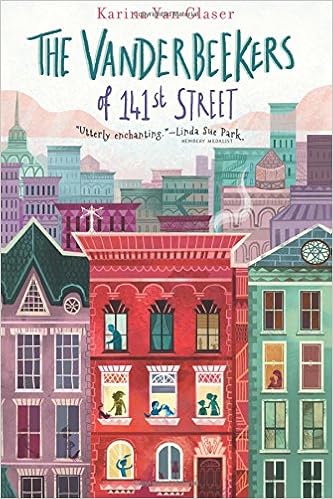
The Vanderbeekers of 141st Street by Karina Yan Glaser

Three chapters in, I thought this book was such a bore. But now that I've finished it, I'm looking forward to reading the sequel that came out just a couple months ago (The Vanderbeekers and the Hidden Garden). What changed? Instead of being impatient with a slow plot, I became so engaged with the characters that I was more interested in their own development and emotions than in the resolution of the central question--which is: Will they have to move? And where? 

While I love a good fantasy book full of imagination and magic and creative settings, every once in a while I need to sit down with a real-life story about normal people with normal problems. The Vanderbeekers of 141st Street is just such a book, and ideal for an early grade school audience. 

This book is appealing to me largely because it's clearly an homage to all lovely homes in the world. This family has made their home in Harlem in Manhattan, which is hard for me to relate to. But there's no doubt that the picture that Karina Yan Glaser paints is very attractive. The Vanderbeekers are an in-tact family of seven (living in Manhattan... which perhaps requires a bit of suspension of disbelief right up front): father, mother, and five kids (plus dog and bunny!). Mr. Vanderbeeker grew up in this particular neighborhood in Harlem, as did all of his kids up to their current ages, and even in this particular house for the last 6 years or so. The Vanderbeekers know everyone in the neighborhood and help take care of the elderly and thoughtfully include those around them in their lives. It's a beautiful picture of the way all people are meant to live in community. A personal favorite moment is a snapshot of how comfortable the family is with all different sorts of people when a "gentleman" in baggy pants with a rhinestone studded dog leash out walking his chihuahua who, upon seeing a contingent of the kids, greets them with, "What-up, Vanderbeekers?" (Even though I would not normally think "gentleman" when seeing a person of this description, I love that he is labeled such in the book, showing that the children see him that way and have a way of treating all grownups as "ladies" and "gentlemen" no matter what stereotype they might fit into.) 

Of course, the family is a bit loud. How can you not be loud when there are 5 kids in one family? In fact, their noise and conspicuous presence is part of what causes their landlord to decide not to renew their lease. So the kids develop a hair-brained (and ill-fated) scheme to capture the heart of the evil Beiderman so he will change his mind and let them stay. The plan includes everything from offerings of homemade place-mats, a kitten, threats a la Treasure Island, and a neighborhood petition to show how Harlem would not be the same if the Vanderbeekers had to move. 

The story is simple and fairly slowly developed. The whole book takes place over about 4 days surrounding Christmas. But each child, and both parents are fondly sketched--each their own delights and sorrows and dreams and memories. They are altogether charming. This book does much to affirm the goodness of a family, both for the members of that family and also for the good of the community that surrounds the family. 

Wednesday, November 7, 2018

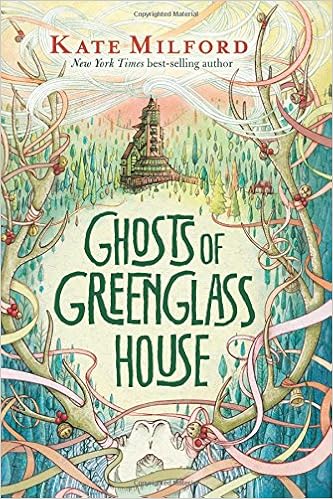
Ghosts of Greenglass House by Kate Milford (book review and character summary)

A new mystery, a new search, and a new bunch of crazy people--Ghosts of Greenglass House is everything you would expect of a sequel to Kate Milford's award winning Greenglass House. 

The craziness begins anew when, just a couple days before Christmas, the Wait's show up at the front door of Greenglass House. Who are the Waits? A mysterious and slightly creepy caroling group. They wear outlandish costumes covered in bells and holly and mistletoe and they carry a "hobby horse"--an animal skull bedecked with ribbons and bells and candles. But then, for some reason, everything starts going wrong. The cleaning of the chimney is a complete disaster, filling the air with soot and grime. One guest seems to get poisoned by some punch (someone put Christmas berries in with the spices!) Two other guests are whacked on the head by an unseen molester. 

It seems impossible that all this is coincidence when only the day before, Georgie and Clem showed up at the Greenglass House seeking a  low-profile haven after a job gone wrong. And sure enough, the same evening that the Waits are spreading chaos over the Greenglass House, Georgie and Clem both find that they have been robbed. As far as they can tell, the stash they brought wasn't particularly valuable--just special because it once belonged to Violet Cross, the famed smuggler who supposedly did the impossible and mapped the ever-changing Skidwrack River. Such a map would be an invaluable treasure! It doesn't seem like the map was among the things they found in the old hideaway, but if it was.... things could get a lot messier than a bit of soot on the Christmas tree! 

To complicate matters even more, there's another mystery guest: Emmett Syebuck. He appears to be at the house as an artist obsessed with the stained glass windows. But is he really who he says he is? He clearly has some skill. But his interest in Clem and Georgie when they arrive is more than a little suspicious. Is he the another thief? Is he working for himself? Is he a customs agent? 

In contrast with the first book, Milo learns to use his emotions (instead of ignoring or dampening them) to strengthen his understanding and intuition of those around him. Like the first book, this story draws on the uses of a role-playing game (Odd Trails) to help Milo adapt to new situations and learn how to be a more capable, calm version of himself. And like the first book, there are several side-stories told by the characters--and it is for the reader to determine just how relevant they are to the mysteries at hand. 

All in all, Ghosts of Greenglass House is a fun and fast read that follows well in the footsteps of Greenglass House. Stay tuned for my thoughts on Bluecrowne--the Nagspeake companion novel about the magical first inhabitants of Greenglass House (the Bluecrowne family.)


For those who have taken some time in between reading the first and second book, it might be helpful to have a refresher of characters and summary of what happened in the first book: 

Milo Pine (and parents) - Mr. and Mrs. Pine, with their adopted son Milo, live at Greenglass House and run it as an inn. While not actively participating in smuggling activities, it's generally understood that Greenglass House is a relatively safe haven for smugglers to lie low for a while. The first book revealed the unique history of the house in being owned by one of the greatest smugglers in Nagspeake history (Doc Hollystone). 

Meddy - Milo's friend from the first book, who is actually the ghost of Doc Hollystone's daughter. Her real name is Addie Witcher, but adopts the nickname of "Meddy" when Milo mistakenly thinks that she is the cook's younger daughter. She helps Milo gain confidence and introduces him to the role playing game (Odd Trails) and helps him solve the mysteries of Greenglass House. 

Georgie and Clem - two girls in their twenties who show up in the first book. They are both consummate thieves, specializing in different techniques. In the sequel, they return to Greenglass House as a haven after attempting a "job" together which went badly. 

Owen - a minor character, but meaningful to Milo. This is the man whose affections Georgie and Clem were competing for in the first book. (Clem won.) More significantly, Owen has a tie to Greenglass House because his middle name is the same as the ancient family name that used to belong to the house: (Lansdegown... or Bluecrowne.) He's Asian and adopted, and at least in the first book, knew nothing about his birth family or Asian heritage. Because of the similarities in their situations, Owen becomes something of a mentor to Milo. 

Mr. de Vinge - he has a fairly minor role in this sequel, but does show up. The Deacon and Morvengard agent who was deputized with the Customs patrol who was originally responsible for Doc Hollystone's capture and death. He proves himself ruthless in the first book, and conniving and double-crossing in the second. 

Lizzie and Mrs. Caraway - minor characters. The cook and her daughter, but still safe people and affectionate family friends. 


Wednesday, October 31, 2018

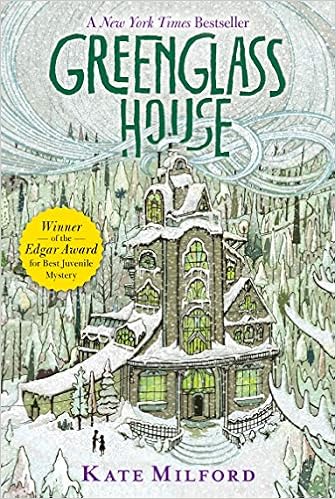
Greenglass House by Kate Milford

Part of the inspiration to re-read Greenglass House came from enjoying Winterhouse so much, and being reminded in many respects of Kate Milford's novel from 4 years ago. Both novels are set over Christmas vacation in an inn-like setting, featuring boy-and-girl teams that search for clues relating to the house in order to secure the safety and future happiness of the in/hotel and the family that runs it. However, for all the similarities, Kate Milford wins the honors hands down for delivering a better book on the whole. 

In Winterhouse, Ben Guterson developed a great mystery and fun puzzles. But Kate Milford took her characters and story many layers deeper. In Greenglass House, she (seemingly) effortlessly draws out the personal struggles that everyone has faced to greater or lesser degrees. Milo is an adopted son from China with decidedly white parents. He clearly has some kind of OCD. So the story is not only about these kids solving a mystery, but also about how Milo learns new skills to keep his cool when confronted with unexpected, startling, and unpleasant surprises. Who doesn't wish to keep their cool under fire? Isn't that half of what makes James Bond so appealing? 

So Kate Milford weaves these stories of discovery together: discovery of the history of a place and discovery of the character of a person.... almost the creation of a character of a person, because (as she illustrates in her story) we may not control where we came from, but we can absolutely control where we're going and who we are going to be. This is part of why the inevitable comments and facial expressions make him uncomfortable--the one's that say "one of these is not like another." But even more discomfiting is his own tendency to wonder about his birth parents and the endless "what if" questions that haunt his perception of "what might be" and "what might have been." Who hasn't had those thoughts? What if I were born into a different family? What if I had a family that looked like me? What if I had siblings... or if I looked different... or if someone else were the adopted kid and I wasn't?  

Not being someone who has ever struggled with OCD, I appreciate that Kate Milford is able to illustrate (without explaining) some of those struggles and delights. Seeing Milo almost lose it because someone touched his stuff helps me to accept that it's a pretty big deal for someone with OCD. Caring for my friends who have OCD means understanding that their security and safety and peace of mind might often rest in having a complete understanding of what is going on around them (both physically and emotionally.) At the same time, she also illustrates the delight they have when they DO understand and have confidence in that understanding--as when Milo goes in his room, shuts his eyes and relishes the plop as he drops his things in the middle of his desk. Then he turns, eyes still closed, and free falls backwards onto his bed, relaxing completely into the confidence that it is exactly where he knows it to be. 

Milo meets a friend and she introduces him to a role-playing game, Odd Trails. But they don't exactly play the game. They enjoy the elements of pretend to imagine the person or character that they would like to be--and then they think about how they can be that person when their "real" self would be an incompetent mess. For example, with Milo's OCD, he can tell even if the slightest thing is out of place. But when he's being Negret (a sly and stealthy reconnaissance sort of guy), he's more occupied in gathering information and understanding the movements of people around him...so occupied that he doesn't have time to be bothered by the fact that something is out of place.

And what do you know? This imagining and pretending helps Milo to see how Milo (and not his pretend persona, Negret) can live with more confidence, charisma, and generosity. I realize that there are plenty of ways where playing pretend in the real world is dangerous and unhealthy. But in this case and for this purpose, it's a great thing! We could all benefit from a little more imagining of who we wish we were... the heroes we admire, the thoughtful friends who have touched us deeply, and then "pretending" in real life to be that. This is the kind of practice that eventually makes something real. It's the idea behind "do what you know is right until it feels right." However, all along it's most important to keep checking and making sure that the person you are practicing to be is actually someone good and admirable. And now, with the role-playing game, Milo can address some of those questions and actually wonder about them without feeling guilty for even thinking them. Of course it's natural for him to wonder about his birth family. It's doesn't mean he's being disloyal. It doesn't mean he doesn't love his parents. He does! He doesn't wish to be in a different family or home, he just.... wonders. 

And I think this is another thing Kate Milford does excellently in the context of Greenglass House. This is an extremely unusual case of a story with a complete, in-tact family. Parents and child have a good relationship. The parents seem to have a good relationship with each other. They make it through the chaos and uncertainty of the winter holiday with relative cool. After all, they had FIVE guests show up on the same night in a season that typically yields almost no customers. That, coupled with Nagspeak's history of smuggling (and ruthless customs officials) would put anyone on edge, not just the OCD boy who's resenting the intrusion on his Christmas holiday. Mr. and Mrs. Pine divide and conquer with admirable teamwork, and both of them pursue one-on-one time with Milo, genuinely concerned that he has a good Christmas break and knows that they are there for him, even when they are obviously "snowed under" with customers.

But there's no getting around the fact that parents and kids have things to work through even if they have a good family dynamic. In a world where the majority of families are broken and everyone in the family is hurting and distrustful of the others, it's easy to look at those kids who have both parents and actually like being with them and say, "what's your deal? How can you have any problems? You have both parents. You're not being abused. You have it so easy...." And yes. In a way, those families do have it easy and should be thankful for that. BUT. Those families are not perfect, and there is miscommunication and worries and unmet desires and, well, things to work through and figure out. But I'm thankful to see this side of things in a modern children's book: Children protagonists (and real children) do not need to be abandoned or lonely or unsupported by their parents in order to grow and strengthen their character. And to have a whole and loving family is a beautiful thing to be desired and relished whenever and wherever we see it (even in a story.) 

Wednesday, October 24, 2018

Winterhouse by Ben Guterson

Ben Guterson's debut novel from early this year, Winterhouse, calls to mind many well known and beloved mid-grade mysteries. With and orphaned protagonist (Elizabeth Somers), a beautiful but mysterious holiday abode (The Winterhouse Hotel), various clues and puzzles, a friend and partner in solving said puzzles, an elderly benefactor who has an evil twin.... all of these and more conjure up memories of The Mysterious Benedict Society, The Westing Game, Escape from Mr. Lemoncello's Library, and particularly Greenglass House. For those who have read and enjoyed any one of these books, I can unreservedly say that you will enjoy this one immensely. 

Elizabeth Somers has a relatively miserable existence living with distant cousins of her father's (whom she calls Aunt and Uncle.) An unexplained mystery (no doubt the theme of future sequels) is the disappearance of Elizabeth's parents. Elizabeth herself, was only 4 at the time and has only vague and troubling memories of some kind of violence...but which never seem to line up with her Aunt's story of what happened. Her Aunt and Uncle are sufficiently selfish to not be at all suspicious when some anonymous donor bequeaths $5,000 for them to take a vacation, and tickets and lodging for Elizabeth at the world-renowned Winterhouse Hotel. They and she make their departure for 3 weeks surrounding Christmas, and Elizabeth begins her journey into a jaw-dropping setting: a 13 story hotel on the edge of a lake full of regal splendor and luxurious comforts--the kind of place only millionaires would pay for. So there's no doubt that her aunt and uncle couldn't possibly have arranged her stay, and Elizabeth is haunted and puzzled by the circumstances bringing her to Winterhouse, even as she enjoys the best weeks of her life. 

And they are the best weeks aside from a few odd things... the creepy and sinister couple who also ride the late bus to the hotel, the owner's mysterious midnight visits to the library, whispered conversations, seemingly unsolvable puzzles all over the hotel. But she does make her first "real" friend, Freddie Knox, who is just as keen on word puzzles as she is! He's reluctantly curious about the goings on at Winterhouse, and Elizabeth (through some trial and error) learns that when you have friends, it's important to not be too pushy or to assume that they share all your own interests. 

The location itself is my favorite element of the story. The building is glorious, with an enormous dining hall for meals (complete with nightly magic stunts by the illustrious owner, Norbridge Falls), museum-like rooms full of generations of family paintings, a swimming pool and movie theater, world-famous candy, an enormous library; and sledding, skiing, and ice skating for outdoor fun. And, it's full of interesting people, all pursuing various relaxing holiday activities. In short, a fabulous place for almost anyone. 

The mystery is fun and exciting, with some magical and ghost-y elements. It kept the action going at a fast clip, and I finished Winterhouse in about three days. It's lively in its characters. It's beautiful in its setting. It's totally worth going to, even in (especially in!) your imagination. 

Wednesday, October 17, 2018

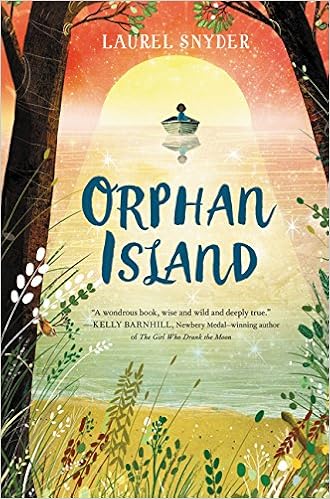
Orphan Island by Laurel Snyder

In Orphan Island, Laurel Snyder has woven together an intriguing mixture of unique characters, Utopian setting, and unanswered questions. The result is captivating, thought provoking, and you should read it. Without being didactic, it teaches its lesson well: Sometimes you have to obey the rules even if you don't know why. Sometimes you have to work with and care for people you don't even like. Sometimes you have to move on and leave behind the things you love even if you try your hardest to hang on. And you won't ever know all the "why's", but someday you'll see enough to be okay with it. 

Orphan Island is a kind of coming-of-age story. It's a fairly simple setup. There's an island with only 9 orphans. Every year (approximately) a boat comes bringing one more child--the new youngest, and immediately taking one away--the oldest. The one who comes is the Elder's (the new oldest's) Care, which essentially means that in the intervening time before the Elder steps into the next boat, he or she has to teach their Care the ways of the island--what's safe and what's not, but always including the three essentials: how to swim, how to read, and how to cook. At the same time, the Elder is responsible for teaching the Elder-in-training about what to do with their Care with the boat comes again. 

We're introduced to our protagonist, Jinny, right as she becomes the new Elder. She watches her best friend, Deen, step into the boat. Simultaneously, she loses her best friend and comfort and receives responsiblility for a snot-nosed, whimpering toddler, who declares her name is "Ess." Jinny does less than a stellar job through her year as Elder. She loves Ess very much, but Jinny struggles with following the rules that were laid out on the island, passed down for who knows how many years..... and we always come back to "why?" Why are these nine children on an island? Are they truly orphans? When did the whole thing start? Why only nine and no more? Why do they always have to be the same ages, leaving at a certain point to be replaced with another youngster? Why. . . ? When. . . ? Who. . . ?

Jinny has her fill of questions, frustrations, and doubts, and when it comes time for her to step in that boat and ride away from the only life she's known to.... who knows where... she rebels. She pulls the boat up on the beach, and for the second half of the story, it's an experiment in what happens when one person decides that she doesn't have to follow the rules. And the story is set up to show--to prove, in fact, that no human being has the ability to just stay where they are. Time keeps moving forward, and children keep growing up. And even when people try to hang on too long, it affects and warps the relationships all around them. No one can just make decisions without them affecting other people. Each of the other children on the island has their own jobs and personalities, and it's peaceful and harmonious while Jinny is operating within the normal setup of the island. But as soon as she goes off the book, each of those relationships changes in a significant way. 

In the afterward, Laurel Snyder admits to writing a back story, a preface that was deleted from the final printed copy. So there is an explanation for many of the questions we're left with. But--oh so true to life--we don't actually get to know what it is. This is the point of the story. We don't get to know everything. We don't get to have everything explained. And yet the world is still SO beautiful. Do we need to have everything explained to enjoy it and love it the way that it is? Can we not just trust that the rules are there for a reason and follow them, and encourage others to follow them because life is good that way? My 12-year-old self would have both loved and hated this book.... it summons courage for those fearful of a new stage in life, which I certainly needed and would have appreciated. But as always, I would have hated the teaching that "the rules" apply to everyone, including me. I, like Jinny, prefer to decide on my own what to do.... but also like Jinny, I've learned that life isn't about what I want. It's about obligations and duty, other people, finding and relishing the delight around us, cultivating the world and ourselves to be more than we were (and in my version) to the glory of God! 

This is a great book. I'll be reading it again, and in about 5 years, my own kids will start reading it.... hopefully, by then, I'll have reconciled myself to them entering a more complicated world outside their homey and childish pursuits. 

Wednesday, October 3, 2018

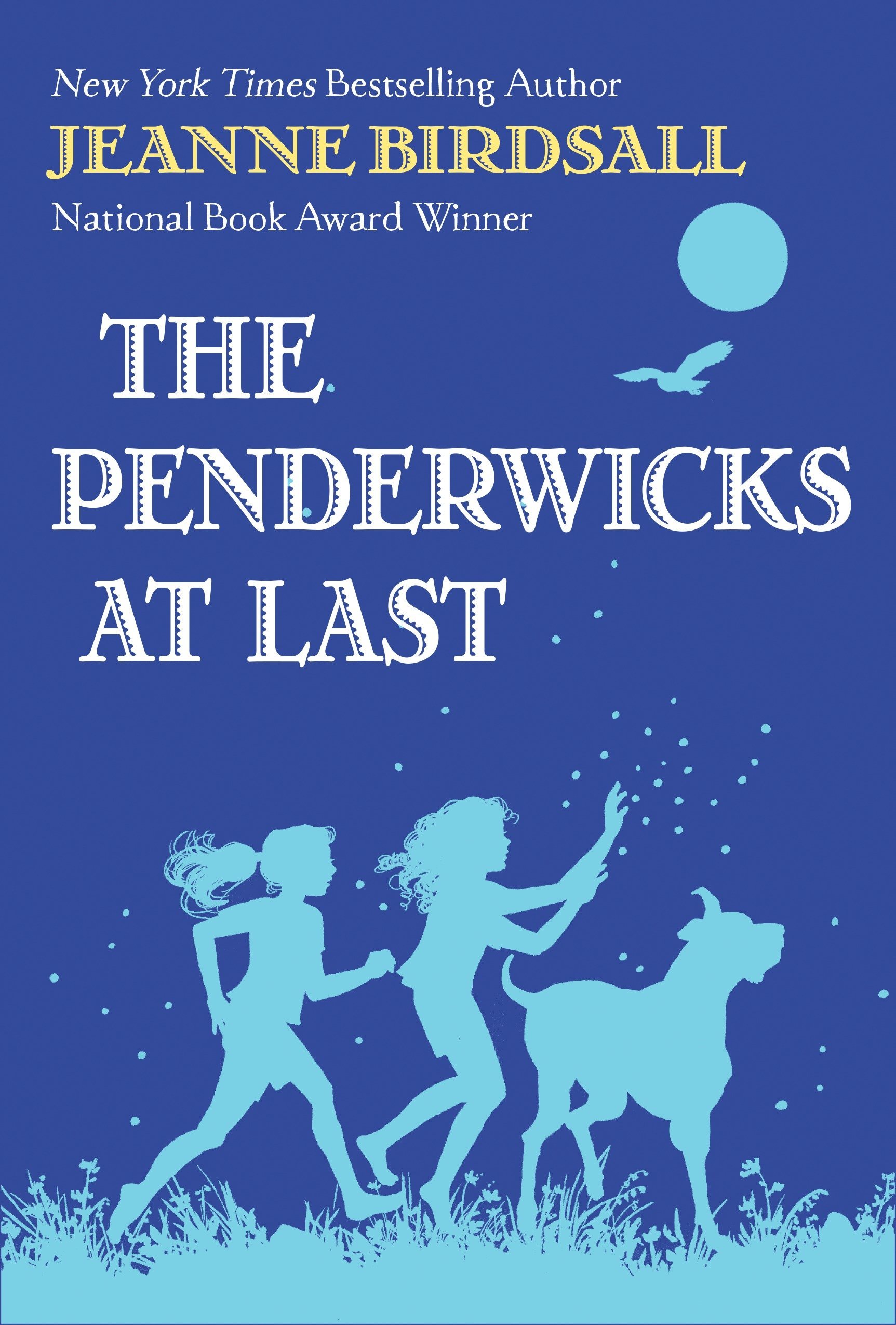
The Penderwicks At Last by Jeanne Birdsall

For me, this book was "okay." It was a sweet conclusion to a series where each sequential book was told from the eyes of the current 11 or 12-year-old in the family--this time, Lydia Penderwick. 

In the first couple books, the older 3 sisters, being close in age, played a large role in each other's stories, and we saw some character development with each of them. But with these last couple (The Penderwicks in Spring about Batty, and this newest release) are more about the one sister, with some minimal interaction with the older sisters. 

As with all Penderwick lovers, I had hoped for more development of the older Penderwicks, but considering the trajectory of the previous books, I felt that this was not Jeanne Birdsall's MO and figured that in a sense, she wrote each book as a "stand alone" story, each a "companion" book to the others. Since the main character is different, the other sisters whom we have grown to know and love are more tangential, little more than names that are mentioned here and there. This expectation was confirmed, and I was disappointed.

It is perhaps understandable that Jeanne Birdsall might not wish to tread the dangerous ground of trying to take some truly beloved characters and age them so that they are as empathetic and charming as they were when children. (Honestly, even Anne Shirley was supplanted by her own children as main characters in the last several books of the series.) 

However, I was at least prepared to be disappointed of a glimpse into the older Penderwick's characters.... but I had hoped for a slightly more substantial story. I do want to give credit for fabulous writing style--each of the books is an absolute delight to read. I'm pretty sure Jeanne Birdsall could write a book about dryer lint and it make it interesting or at least insightful. However, some of her books have much more history, character development, and 'interesting or insightful' events than are displayed in this story. What did take place was described and narrated with fabulous wit and style. But I felt like there wasn't actually that much taking place. Many of Lydia's adventures with Alice (and Ben) felt like filler events in between wedding preparations. 

And I also am happy to go on record saying that I never expected or hoped Jeffrey and Skye to have a romance.... they are completely wonderful as friends and would be terrible as a couple. Batty is a much better option for Jeffrey, considering her grown up persona (I should note, as a caveat to my previous criticism, that we do see a substantial amount of Batty in this book, which is nice.) And it's also nice that Jeanne Birdsall left the romance as an open suggestion at the end of the book, allowing the reader to fill in the future. 

So to summarize: my disappointment is centered around my own lack of interest in the characters. And that stems from simply watching them doing things that I don't find terribly interesting, and without feeling like I really understand the depth of their characters. However, that is as far as my disappointment goes. Even without understanding the characters, I enjoy reading about them and am fond of the family and the aura of the series as a whole. There is no doubt in my mind that I will continue to re-read this series, and not omit this one at the end, in spite of it's probably being my least favorite. (And I DO, in fact, omit re-reading books in a series if I don't like them enough.)

I love this genre; I love Jeanne Birdsall's writing; and I unreservedly recommend the whole series to any girl looking for a good read. 

Wednesday, December 14, 2016

The Girl Who Drank the Moon by Kelly Barnhill

This book is such a fun, wild ride. It starts off with a dystopia narrative: evil leaders of a small secluded town keep control over their people by inventing an evil witch who demands their youngest baby to be left for her on the same day every year... but the twist! There actually IS a witch. And every year she comes and rescues the poor babe who is left on the edge of the wood to die. She takes the babies on the harrowing journey across the woods and to the "free towns" where they are adopted and loved. 

Throughout, there is magic spun through the story in beautiful, fantastic ways. It causes a contrast between the dark and gloomy town and the other side of the story--certainly not a utopia by any means, but it is bright and loving and exotic and full of joy and adventure. This perhaps wasn't always the case, but one year the witch (Xan) is distracted by the baby she is rescuing and feeds her moonlight instead of starlight--a dangerous thing to do, since moonlight is highly magical, and for a baby to eat SO much of it... well, Luna became a truly magical child. 

Surprisingly, this was also Xan's experience, being enmagicked as a child. So we see that it is not only a joyful, powerful life that Luna is given, but also a heavy burden of hundreds of years to try to live well. Xan and Luna are opposites in many ways. Luna wants to know everything, while Xan has a passion for forgetting things. Luna is young, Xan is impossibly old. Kelly Barnhill weaves her story around this pair and surrounds them with a superb cast of side characters (some of my personal favorites of the book) that make the book well worth reading. 

My one disappointment of the book is the ending. It wasn't a bad ending by any means. It merely could have been much better and more meaningful. The last several scenes are all about love--love expands your heart and your mind and forgiveness and makes things expand to infinity. It heals! It creates! etc. . . But there were so many other things that I wanted to see in the conclusion of the story. The love theme is great, but it needed more, considering the complexity of the story and the characters.

There were SO MANY opportunities for Barnhill to connect pieces of magic and story hundreds of years apart, and it seems like she missed them, or at least didn't exploit them in the meaningful way that I hoped for. The importance of forgetting and remembering should certainly have returned in the end. The mantra "Don't forget. I mean it," is repeated many times. (This being a message from Xan's mentor to her.) It seemed obvious that the purpose of this message would be explained in the conclusion. And I expected Luna to take up Xan's mantle and remember (or learn for the first time) the things that Xan insisted on forgetting. But no, there's no ultimate explanation of what that message meant. Luna doesn't go off to search for the missing stone doors to the hidden castle that Xan's mentor protected in his dying hours. The door and the castle seemed to play an important role in the story, but we never find out exactly what it's all about.

Why not? Because in the end, love is enough? Because Luna found her crazed mother and is trying to heal her? Because they rescued the town from its evil rulers and Truth is becoming known?  

Maybe. All those things are good, and I enjoyed reading about them. Nevertheless, it makes a mediocre end to an otherwise fabulous book. The first 43 of the 48 chapters made me think this was going to be a read-every-year, favorite book of 2016. And then the last 5 chapters were so full of love and so lacking in explanation, it left something of a disappointed, flat taste in my mouth. As it is, I will probably read it again sometime, but not every year. And though I like it very much, it's not my favorite book of 2016. But I will certainly recommend it to many people. I might even put it under the tree this Christmas! It is after all, a fun, wild ride. 

Monday, November 25, 2013

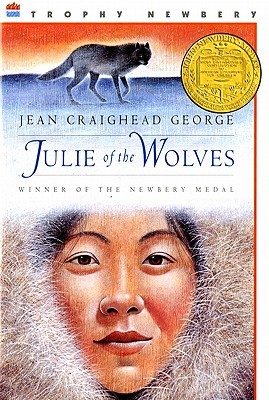
Book Review: Julie of the Wolves by Jean Craighead George


I've been trying (off and on) to read through all the Newbery Award winning books. It's been fun, and I've actually been pleasantly surprised by the high quality and sentiment that I've found in many of the recent winners. But I'm going to say right up front that many of the Newbery Award winners of the 70s and 80s just don't impress me. Julie of the Wolves was the medal winner in 1973. And while I assent that the book is a fascinating story, and very well written, it's just not inspiring. But please hear me out because I do think this is a good book and worthy of a read. I just wouldn't put it on an Absolutely Must Read list. 

Now, of course, there are plenty of award-winning stories that I don't find inspiring, but as I've read more and more, I've noticed general trends over the years. (And since the Newbery Awards are given each year to books that came out the previous year, it's easy to see general shifts as styles coming in and out of vogue.) The vogue for many of the 60s, 70s, and 80s books seems to be a writing style focused on realism--the sort of realism that tries to relate to people instead of inspire them. I have nothing against being realistic per se, but a story can be both realistic and inspiring, and I think those are the ones worthy of a "most significant contribution to children's literature" award. 

Julie of the Wolves is written in this "realistic" style. Though, it hardly deals in normal everyday life, and it's impossible to say how truly realistic it truly is, since it's a story about a young Eskimo girl who gets lost in the wild and survives by insinuating herself into a small wolf pack. The survival story is fascinating, and the reader gets to see much of Miyax's ingenuity and good humor. (Miyax is her Eskimo name, while "Julie" is her assumed English name.) She watches carefully and patiently, and learns her surroundings in the vast wilderness until by a combination of wisdom, chance, and cleverness, she is able to sustain herself. The story gives a good flavor of the lifestyle of the old-school native Alaskans, and the Americanization of many of these Indians. It also briefly mentions the very prevalent problem of alcohol abuse in the northern villages. All of these I can vouch for being fairly accurate, not from personal experience, but from my own father's stories. (Who travels around and works in many of these villages.) 

In the middle of the book, we have a flashback, explaining why she ran away into the middle of this wilderness. Aside from the beautiful way that Miyax delights in the wilderness and in her own ability to survive, there is much sadness in this story. Miyax was taken away from her father to be put in a school. She was "married" at thirteen to the sun of a drunkard. Then she subsequently ran away from this arrangement...when she got lost in the wild. On the other side, when she comes out of the wild and finds her father again, the reunion is singularly disappointing. He remarried (his first wife having died) an American woman who wants her to speak English and put her in school again. 

These last circumstances are not necessarily bad, but they're sad when contrasted with how much Miyax had grown to appreciate the knowledge and wisdom that the ancient Eskimo's passed down. The reader does not see Miyax praised or congratulated for her fortitude and capabilities. All we see is that she arrives home, eager to share her new found skills, and she is merely asked to act like a "normal" American girl. First this offends her, and she leaves her father's house. But, unaccountably, she changes her mind, is somehow reconciled to the fact that "the hour of the wolf and of the Eskimo is over" and returns again. As I said, it's a fascinating book, but hardly inspiring. 

However, I can give a few good reasons for reading the book: 1) the descriptions of the Eskimo lifestyle are fascinating and full of the wonder and ingenuity involved in "living off the land." (This was one of my favorite parts about the book.) 2) The writing is excellent and succinct, and the descriptions are often poignant or full of good humor. And 3) the "real life" elements in the book, while sad, present some important questions that are good to discuss with school children.

(The book, by the way, is categorized as being for ages 10 and up, which I would certainly corroborate in light of the potential questions and discussions about the story.) 

Thursday, November 21, 2013

Book Review: Young Fu of the Upper Yangtze by Elizabeth Foreman Lewis


I can hardly think of a culture more different from modern America than that of 1920s central China which Elizabeth Lewis presents in Young Fu. And yet, for all the differences, Young Fu is a teenage boy who faces hardship, peer pressure, and the result of his foolish decisions. He is also ambitious, works hard, and humbly accepts correction to please his superiors. 

In this other, very foreign culture, Young Fu moves with his mother from the violent and war torn countryside to the city of Chungking. There in the city, many people live in squalor, eating (with little variation) a penny's worth of rice a day. There, a "Beggar's Guild" and "Thieve's Guild" demand money from the tradespeople in exchange for a promise that they would not be molested. There, coup after military coup ravages the city as soldiers steal food and supplies from the people, and murder the citizens at a whim. And there, Young Fu plans to make his fortune. 

All of these aspects of the city and Young Fu's life are incomprehensible to the modern American reader...except for the last. Children in every culture dream of their futures and desire to make a name for themselves. Anyone could appreciate Young Fu's ingenuity and hard work. And even if they don't share it, they would recognize that Young Fu's passion for learning was significant in his success.

Of course, as the American welfare society has developed, there is less need for ambition to work hard and "rise above" a current situation. After all, why work when you can live fairly comfortably on someone else's dime? Young Fu did not have this option. But in the book, we see the rise of Communist sentiment, and Young Fu experiences firsthand the damage it can do to society and businesses. But Young Fu had no sympathy with these new and radical ideas. His ambition and hard work was unique even in his day. His character, while not exactly a "hero" figure, is not just someone to relate to, he is a figure to inspire the reader to a better and more fruitful life. 

One thing that inspired me was Young Fu's amazing humility. Make no mistake, he had plenty of pride and thought quite well of himself and his abilities. But there are several occasions when he makes foolish decisions, with serious consequences that affected not only himself but also his mother and his kind employer, Tang Coppersmith. In these circumstances, he faced a dilemma: should he cover up his mistake and try to fix it on his own; or should he confess it and lose the respect the he had worked so hard to earn? Each time, Young Fu decides that the safer option was to speak the truth, apologize, and work hard to make it up. This humility earned him extra work but he also gained much respect and the friendship of his elders. 

This would have been an excellent book for me to read as a child, and I will certainly make sure that all of our children read it! It's a quick and exciting read, with good themes of honesty, hard work, and respect for others. And what's more, it's a culturally accurate historical novel that provides a little glimpse into Chinese life in the 1920s. It's never a bad thing for children to realize that the world is full of people who live very different lives...but who are also very alike in the most essential ways. 

Monday, November 18, 2013

Book Review: Caddie Woodlawn by Carol Ryrie Brink


I remember my dad reading this book to us when my brother and I were young--young enough to share a bedroom. Suffice it to say that it was a long time ago. I fought with, and adored, my brother in those years. I was something of a tomboy, and proud of it too. So when my dad read Caddie Woodlawn, it delighted me so much that I remembered my delight years and years later, even when I couldn't remember anything of the story. 

I bought the book at a sale not long ago on the strength of that memory, and only in the last few days have I accomplished the re-reading that has been waiting the last twenty years. And I was not disappointed! 

Caddie Woodlawn is a book that will certainly delight both boys and girls. It has everything in its favor. For one, it is based off of a true story--the story of the author's grandmother, Caddie Woodhouse Watkins. And that fact alone makes many elements of the tale even more exciting, even though we don't know which parts of the story were "true" or "embellished". The exciting escapades of the children are more daring; their friendship with the Indians is more unusual; their favorite dog walking from St. Louis to the wilds of Wisconsin is more incredible; and the surprising truth about their father's past is more astonishing, simply because of the possibility that they might actually have happened to the author's grandmother. 

Then, there's the delightful character of Caddie. She's a tomboy for sure. With her, Tom and Warren, the two brothers on either side of her in age-rank, formed such an inseparable triumvirate that when Caddie (finally) started being interested in house work, the boys followed suite. They learned to quilt and cook and keep house with her, assuming that nothing Caddie did was too "girly" for them! She was quick, vivacious, and full of daring. But it's clear that she is compassionate as well, which is just as winsome as her courage. On one occasion, she has a silver dollar all to herself and spends it all on the lonely half-Indian children who lost their mother. Through the story she also gradually notices and has more sympathy with her younger sister, Hattie, whom she had always previously regarded as nothing more than a nuisance.  

Throughout the book, there are many good episodes to provoke thought or conversation about right and wrong, bravery versus disobedience, generosity versus "wisdom", and in general, what it means to be part of an American family. Without being preachy, the themes of hard work, learning, independence, sacrifice, and camaraderie are apparent in each chapter. It's a great book. I heartily recommend it, and I definitely won't be waiting another twenty years for the next re-read! 

Thursday, August 22, 2013

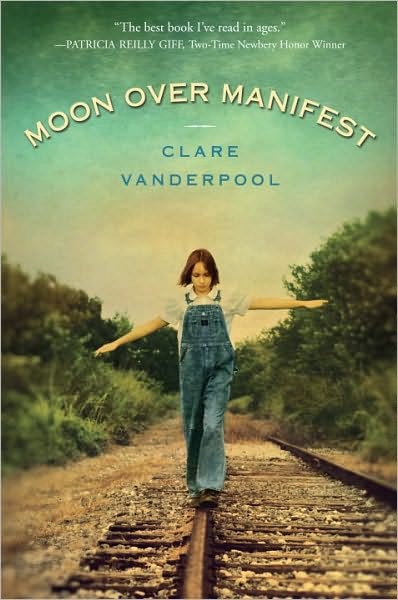
Book Review: Moon Over Manifest by Clare Vanderpool


The “present” is the summer of 1936. The “past” is eighteen years earlier, during the years of 1917-1918, when the U.S. entered World War I.

Abilene Tucker has been sent to Manifest by her father, who up till now has seemed content to rove with her over hill and dell. But since she’s stuck there for the summer, she might as well try to discover all she can about her father and the town that came to life in his eyes when he told stories about it. The trouble is that Manifest is no longer the town “with a past and a bright future” as it had said on the sign back in the day. Now, it’s just a town “with a past.” Abilene Tucker has her work cut out for her in trying to unravel it.

She makes friends—some her own age, and some are older; people who had been there and known her father. The intimidating Miss Sadie seems to be the one who knows the most about Manifest “back then”, but Abilene can’t push her—she would tell the story in her own way and at her own pace. Moon Over Manifest is a simple story about the meeting and reconciling of the past with the present. Abilene learns about the people, her father along with them. And with Miss Sadie telling the story, Abilene sees that everyone has their own unique story. They fit together, criss-crossing, running parallel, starting and stopping, making history.

“Back then”, the story was about a town trying to free itself from under the thumb of the oppressive owner of the local mine—the only main source of jobs and income in the town. “Now” the town must wake up from its stagnant slumber before it fades away into nothing. “Back then”, almost everyone in Manifest was an immigrant. “Now”, Abilene has to research and learn about the various meanings of the word, “manifest” and why it’s an appropriate name for such a town.

Moon Over Manifest is a beautifully written book. Clare Vanderpool does a brilliant job of drawing out different characters and giving them each their own voice, making the reader feel as though he is actually meeting all these people, instead of reading about them. There are letters from one young man, newspaper columns, Abilene’s perspective, Miss Sadie’s story…the book, like the people of Manifest, is a hodgepodge that comes together with strength and unity to make a statement.

And what is that statement? What is the point of the town of Manifest and the unique style of the book? It’s this: A home can be found, and those you feel at home with are your family.

It’s a beautiful sentiment, and the story is certainly worth reading and considering. If the 2011 Newbery Medal isn’t recommendation enough, I definitely recommend it for all middle-grade readers! (9-12 years old.)

Thursday, August 15, 2013

Book Review: Princess Academy by Shannon Hale


I shamelessly admit that I pulled this book out because of its cover. Little cottages stacked on a rocky mountainside…a string of girls in shapeless dresses holding hands…it seemed so unprincess-like that it caught my attention at the book store and I bought it. It helped my decision along that the book had won the Newberry Honor Award in 2006.

And I loved the book, which is completely deserving of the award, and am thrilled to have it on my shelf for easy rereading. Shannon Hale is a fabulous author, and her writing is filled with beautiful images and phrases—the sort that make you think “yes! I have always wanted a way to express that and could never come up with something so fitting!”

The premise of the book is simple: the sages of the kingdom of Danland have prophesied that the prince will marry a girl from the province of Mt. Eskel. But this highlights many problems. First, there are no eligible, noble girls! The trade of Mt. Eskel is mining, first and last, and while important and valuable, the society there produces young ladies who can hurl stones, but wouldn’t know the first thing about “the rules of conversation.” Which leads to the second problem: all the non-eligible girls have no education—making it very hard for them to become eligible! Solution? The Princess Academy.

Tutor Olana, who is charged with the responsibility of changing these mountain miners into pretty princesses is about the farthest thing from a bosom friend. Her rules are strict, severe, and merciless. The girls are taken three hours away from their village to a lodge large enough for them all, and though it is supposed to be an honor to be at the academy, it seems more like prison. Miri, our main character and heroine, quickly becomes estranged from the others because she dares to speak out against the unfairness and the entire group loses their rest day at home in punishment. What else is there for Miri to do but study hard? At the academy, she learns all her lessons and the secret of stone-speak, the mystery of the mines.

When the prince comes, they all acquit themselves beautifully, but he leaves again without choosing a bride. Miri is not sure whether to be pleased (doesn’t Peder, her best friend, back at the village maker her heart beat fast and her palms sweat?) or frustrated (didn’t the prince say that he enjoyed meeting her the best of all the girls?) Faced with another winter on the mountain, things start to unravel…and then bandits show up, believing easy money is theirs if they can get their hands on the future princess. Miri has to use all her wits and wile to save the girls and unite her small town once again. She learns the reason why her father never allowed her to work in the mines—the only meaningful occupation in the village. She learns to understand and care for those who are unlike her and look for things that she care share in common. And she learns where she really belongs. Learning, in fact, becomes her favorite thing.


At least after a first read, I would unhesitatingly put this on a list of stellar books that any middle-school girl would love (and most other girls besides!) 

Monday, July 29, 2013

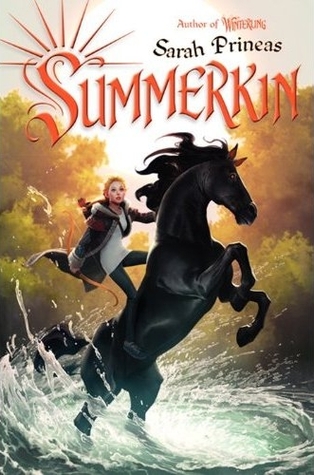
Book Review: Summerkin by Sarah Prineas


Unlike Winterling, I did not read Summerkin in a single day…but it was close. This is a fantastic follow-up to Sarah Prineas’ stellar start to her new trilogy. For those who need a refresher, check out the review and summary of Winterling. I reread my own summary and found it helpful, and it made me excited to read this book!

Fer (short for Jennifer in the human world and Gwyneffar in the faerie world) has defeated the evil Mor and is the accepted Lady of the Summerlands. Or is she? She receives a note from the “Old Ones” who demand her presence in their stronghold in order to compete in a competition which will determine who will rule over the Summerlands. One small hitch—Fer has a problem with “ruling” in the traditional way, with the land's inhabitants all swearing oaths of fealty to the Lady of the land. “It’s wrong,” she insists. To which most other people in the land respond, “It’s the way things are done.” Will she be able to be a true Lady and not “rule” the way they want her to?

And what of her puck friend, Rook? Well, he is a puck after all. The whole goal and purpose of his existence is to make trouble and look after himself and his brother pucks. But something about Fer gets to him. Maybe it’s the fact that she saved his life three times—a number of extreme power in the land. Maybe it’s that she insists on trusting him and claiming him as a friend. Whatever “it” is, it’s going to be tested when Rook accompanies her to the Old One’s dwelling and attempts to make mischief according to his brother pucks’ plan.

And there’s plenty of mischief—and not all attributable to Rook. Another contestant, Arenthial seems like he’s out to win no matter what the cost. He and Lich and Gnar are all contestants from other lands who desire to turn the Summerlands into their own ideal playground. But there is something deeply sinister about Arenthial in particular.

As in the Winterling, Fer’s compassion and helpfulness stand out in the story. She helps her competitors, Lich and Gnar, when they are ill, even though it means “losing” certain contests. Even though she feels that she already is the Lady of the Summerlands, her desire to help and her compassion win over her desire to prove (by winning the contests) her claim to the throne of the Summerlands.


Fer is not perfect, but she is a loveable, admirable character, who still struggles to understand and to get things right. Prineas has polished off a fun, imaginative sequel to Winterling, and I’m looking forward to reading the third book when it comes out! 

Friday, May 31, 2013

Beyonders book 3: Chasing the Prophecy - by Brandon Mull

My husband and I preordered this book, partly because it was a good deal, and partly because we enjoyed the previous two so much. This one struck me as different—not necessarily worse, or bad, just different than I expected, especially in the beginning and end of the book.
The first thing that is clearly different is that the reader starts the book already knowing the story. In the end of the second book, Seeds ofRebellion, we are left with a prophecy showing the “only” way that the rebellion could succeed in defeating the evil, power hungry emperor, Maldor. This third book is only really worth reading to find out just how the prophecy is fulfilled, not if it is fulfilled (despite it clearly being a shot in the dark for the rebellion). Because of this, the reader starts knowing the ending, and a couple small clues for specifics along the way. The book does, in fact, embody the old proverb “the joy is in the journey.” I think this is part of the reason it took me longer to really get into this story than the previous books: there were simply fewer surprises along the way.
The prophecy says that in order to succeed, the Galloran and his team will have to split. One group seeks a piece of lost information, and the other group gathers an army for a direct attack on Felrook, Maldor’s castle built on a high, rock island. The Beyonders are also split. Jason heads off to look for obscure information in an old library, and Rachel (who is now incredibly powerful with Edomic, the language of magic), joins the crew to attack Felrook.
The second main difference is only noticeable because I was expecting something different. In the previous books, almost every chapter introduced some interesting new creature, plant, language, or system unique to Lyrian. I always thought these “inventions” were fun and interesting and I expected them in similar proliferation in this third book. But Chasing the Prophecy is different. It builds more on what Brandon Mull already set up in the previous books. Even though he certainly introduces new creatures, the surprises in this book are of a different kind, and less frequent. They come in the fulfillment of the prophecy, the twists of fate, the necessary deaths, and the clever solutions to seemingly impossible problems.
I will not go through the storyline of the book, because anyone who read Seeds of Rebellion will have a pretty good idea of the structure of the story, and the details, as I said, are the source of the delightful surprises.
At just over 500 pages, I did not find this book too long. Yet it was too long to be impressively good. To be sure, the second half of the book clipped along steadily with the twists and turns of plot. It is the first half that I suspect Mull could have cut down and sped up. But why have a short best-seller when you can have a long one? It’s not Harry Potter, but there was already enough interest to ensure the book’s success. If there had been only moderate interest, or Mull had been a less popular author, I expect his editors would have taken much greater care with his beginning and ending. Evens so, the book is enjoyable; just not a great as I had hoped.
The ending is where I felt truly disappointed. The last page is a letter from Jason to his parents which Rachel takes with her back to their world. (A little spoiler right there. Yes, Rachel returns home and Jason doesn’t.) The letter is meant to wrap things up and let Jason’s parents know that he is still alive, and cares about them, even if he never wants to come home again. But the way the letter is written, most parents would prefer to go on believing that their son had died in a freak accident (being swallowed by a hippo). Receiving this letter would probably leave them wondering if some prank were being played on them, if Jason was alive somewhere in the world, if he was crazy and being kept in some asylum somewhere. Jason, after all his courageous acts, and all his creative thinking, writing from his noble heart to reassure his parents, would never write a letter like this.
The entire book is a great, epic story with a fun surprising resolution to the many problems it presents, and I cannot possibly give it a bad review. It’s fun and I wholeheartedly recommend the entire series. But after a glorious victory, the ending in the Epilogue left a bad taste in my mouth. If you can stomach it, I would just recommend not reading the Epilogue. It’s not really necessary, but if you must read it, avoid reading Jason’s letter to his parents. Instead, savor the triumphant victory, the hero’s sacrifices, the cleverness and goodness of those who succeeded. That is the real, and better ending to the story. 

Tuesday, September 4, 2012

Book Review: The Railway Children by E. Nesbit


Edith Nesbit wrote The Railway Children in 1906, which makes one of the earliest children's books I've read. Nevertheless, the story will certainly appeal to children of any generation. The three siblings, Bobbie (Roberta), Peter, and Phil (Phyllis), have to move away from their beloved home into the country. They don't know why this must be; all they know is some tragedy has befallen them and taken their father away. But the move really isn't so bad. There's the railway, where they "wave their love to Father" every morning as the 9:15 went by to London. And there's the station master and engineers and all the friends that they make who are able to tell them anything and everything about the trains.

Perhaps for today's society, the children seem unrealistically good. But if you take into account that they all respect and adore their mother and they all know that she's having a very hard time with their father gone, well...maybe it's reasonable that they put their heads together and tried to agree to get along and stay out of trouble until everything is right again. That's not to say they never fight. But they always make up well and seem very mature in their understanding of their duty. (I like this part about their characters. But it definitely stands in stark contrast to modern stories where children who are disrespectful are portrayed as somehow being brave.)

In many ways the chapters are episodic. One big exciting thing happens in each, and often it ends up being the children helping or saving someone. They save a train from running onto a pile of trees that fell across the tracks. They save a baby from a burning freight boat. They save a boy with a broken ankle who is stuck in the train tunnel. But all this rescuing is interspersed with other fun episodes. Bobbie, for example, gets some train engineers to fix her brother's toy engine. And in another chapter, all the children together plan a birthday party for Perks, their best friend who works at the station, who hasn't celebrated a birthday in years because he "has the kids and the missus to keep." (The birthday party is probably my favorite part of the book.)

Even with all this do-gooding, the children are fun and realistic. Sometimes they get in trouble, but they always have a rollicking good time. Though it's not an animal book, I would probably put it in a category with Charolotte's Web. It's a simple, tender, fun story, good for younger grade school children. Of course, an adult could read it aloud, but as soon as a child is ready to read chapter books on their own, they are ready to read The Railway Children!


*A movie has been made out of the book, and after reading the book, I am quite interested in seeing it...

Tuesday, August 28, 2012

A Story Set in DC: The People in Pineapple Place by Anne Lindbergh


I recently found this story at the local library, and found it to be completely charming. Of course, the fact that it's set only a few blocks away from where my husband and I spent our first month of marriage certainly adds to the charm. It's always fun to read a book that includes places that you are familiar with.

The People In Pineapple Place takes place in Georgetown, which is a beautiful, upscale neighborhood in NW D.C. The main character, August, is discouraged and angry because his parents got divorced and he had to move to DC from Vermont, and his mom is working all the time as a lawyer. And when she does actually talk to him, she does it in this weird lawyer-speak. So August ends up exploring on his own and discovers this very special alley--Pineapple Place. There, he meets several families that have lived in the same neighborhood together for at least 50 years. The crazy thing is that all of them are the same age they were 50 years ago!

So here's the kicker. It's a fun local story with a zany time warp twist thrown in. August makes all these wonderful new friends, but most of the time, no one can see any of them! But their invisibility is unreliable, which makes some of their adventures especially interesting! During one special magical afternoon, August gets to spend one day with his friends back during the 1950s, when there were trolley cars everywhere and the amusement park at Glen Echo was still in business. It's fun thinking about the same places in a completely different time period. And of course, since no one can see them, they need to subsist on their own among themselves. It certainly is an interesting community!

My curiosity is piqued by the fact that the book is dedicated to her son, "who found Pineapple Place". And though I haven't checked yet, I'm longing to go see if it's really there or not. (In the book, the street itself was invisible to most people.)

While it will never be on the classics shelf, this book is definitely a fun read for children (1-5 grade range) that live in the DC area. It has some fun adventures, is full of curiosity without having anything scary, and has a really great message about how to make friends and love your family.

Friday, August 17, 2012

Book Review: Lowthar's Blade Trilogy by R. L. LaFevers

The Lowthar's Blade trilogy by R. L. LaFevers (who authored the popular Beastologist series) has, I think, taken some unwarranted criticism. I've seen comments about how they are just a baby version of the Lord of the Rings, with simplified character and plot to the point of becoming dull and flat. And while I'm rather inclined to agree with the reviews on the point that these books are completely predictable, they are still excellent for children just beginning to read chapter books. Are you going to give your 9-year-old (who probably can't even spell "courageous") Tolkein's trilogy to read? I hope not... But definitely give them this. The chapters are short, there is lots of exciting action, and the plot and character development is very easy to follow.

In the first book, we are introduced to the world and the concept of a sword of power. We see the mysteriously helpful old man, the elves, the dwarfs, the men, the powerful bad guy threatening to take over the whole world who uses mindless beings he created as his minions, and at the end, we see the necessity of united the men, dwarfs, and elves against the evil mastermind. (This brings us into the second book, which is dedicated to getting the elves on board with the mission. Then the third book deals with the dwarfs and the making of a new blade.) Writing it like this makes it sound even more predictable than it is.

In truth, the characters are not flat. They are unique and face some very compelling and difficult decisions. Relationships change and evolve, and as with all these kinds of stories, there is the essential element of needing to decide who you trust and often having to trust those you do not know very well. At any rate, this is a great book for adventure loving children that are either too young or too unmotivated to read the longer more intricate works of fantasy. These stories may give them the background for the genre that will help them to read and appreciate Tolkein when their actually ready for him.

While Lowthar's Blade has nothing new, it is part of a great style of fantasy novels and contains all the "essential" elements. Again, this makes it perfect for a child who has never read fantasy before - it's a great introduction into a world of similar stories. In fact, most of the complaints I've read about these books are that they are too much like the other, greater works of the same genre. The grievance against them is that they are simplified. But, I believe this is one of their greatest attributes. So don't go out and buy this as a gift for your fantasy geek friend... get this for someone who hasn't explored fantasy, and even if they don't really like to read, I would almost guarantee that this will be one series that they will want to finish!

Thursday, April 26, 2012

A high recommendation: The Incorrigible Children Series


The Incorrigible Children of Ashton Place: The Unseen Guest (which is the third book in the series) made its appearance at the end of last month, and I was finally able to get my hands on it the day before yesterday. And (as would be expected) I finished it yesterday, after once again completely devouring MaryRose Wood's fantastic style and intriguing story.

I've been pleasantly surprised by this series, which I discovered when the second book came out last year, and have since been eagerly awaiting the next installment. These books are geared toward 8-12 year olds, though I certainly find them extremely enjoyable at 25. I've read on writing blogs and interviews that a writer must avoid pulling the reader out of the story at all costs. In fact, the less aware they are that they are reading a book, the better! MaryRose Wood flouts this advice in the most flagrant way--for which I applaud her. She constantly pulls the reader out of the story in order to give a bit of fascinating side information about this or that definition, or point of culture that would be relevant for the Victorian setting of the story. However, somehow, this "bad" technique of pulling the reader out of the narrative to give extra information is perfectly in line with the style of story...almost to the point that these parentheticals often feel like they are delivered by the governess herself--which in turn makes us feel like Miss Lumley is writing the book, even though it is not in first person. It is extraordinarily done, very unusual, and completely charming in every way.

I also give the plot high marks for its intriguing twists and turns. In the first book we are introduced to the brand-new governess, Miss Penelope Lumley and her three pupils that are thought to have been raised by wolves in the forests of Ashton Place. Granted, a difficult premise to entertain, but Wood does an excellent job of making it believable and she takes full advantage of the humorous situations that must result in trying to civilize such creatures. In the second book, we see clearly that there is an enormous mystery surrounding Penelope's disappeared (but, as we find out, still alive) parents, the Lord Ashton's strange fits, the Judge Quinzy using a phony name, and the similarity between Penelope's natural hair color to the childrens'! (For a more thorough review of the first two books, see this post.) Though we do not receive any direct answers to these questions in The Unseen Guest we have many more suspicions that the "Judge" may be somehow related to the Ashtons, and is for some reason, moving purposely to harm the children. We also see Old Timothy (the coachman) being enigmatically involved in underhandedly protecting Miss Lumley and the Incorrigibles. We also get to meet the children's wolf "parent" and see their "home" cave which is mysteriously stocked with fluffy pillows, quilts, candles, and a nearby picnic basket that is full of their favorite sandwiches. Who knew of their existence before they were "found", and are they friend or foe?

We are still left with a boatload of questions unanswered, along with the hope of more information coming at satisfactory intervals between the outrageous adventures that a life with such children must necessarily bring about. I, for one, am impatient for the next book, but not at all in a hurry for the series to end!

Monday, March 26, 2012

Beyonders book 2: Seeds of Rebellion - by Brandon Mull

Ever since I read Beyonders: A World Without Heroes last year, I've been looking forward to the sequel! And truly, Seeds of Rebellion did not disappoint me.

The first thing I noticed was that Brandon Mull was able to effectively review the characters of the first book without doing the annoying "this is what happened in the first book" recap. I appreciated this more than I expected because I wanted to dive right into the story....but I also knew that it has been about a year since I read the first book, so my memory on the characters was pretty rusty. So for those of you that have memories like mine, I'll include at the bottom a small list of the main characters and names from the first installment.

Over the last year, I've wondered what Brandon Mull would do with Rachel stuck in Lyrian and Jason back home in the "Beyond". But no fear, Mull transports Jason back to Lyrian in the very first chapter, though he does it in such a way that makes me question whether Jason will ever make it back to the Beyond...not just the feasibility of it, but whether Jason will even want to go back. He immediately meets up with Tark, encounters a curious race of giants (that are midgets during the day and giants during the night), and starts being followed by a lurker, also known as a torivor. For a while, Jason is on his own, but gradually he makes his way through the countryside, toward a point where he hopes to meet up with Galloran, Tark, and some others. Along the way he picks up Aram, a half-giant bodyguard.

Like the first book, Seeds of Rebellion is largely a traveling adventure story. The Rebel group grows as it travels from place to place, gaining momentum and purpose. First they seek to rescue the guardians of the syllables, because their job is worthless (the word being proven a fake) and Maldor is moving against them. Jason and his group meet up with Rachel and Drake who find him with a special spell the Charm Woman gave them. Once they rescue Corinne, who turns out to be Galloran's daughter, they turn their attention toward a drowned city, where Galloran knows they can obtain and kingdom's worth of orantium (the grenade-like explosives we see in the first book.) Rachel shows exceptional promise speaking Edomic (the language the world was made in, the language of power and magic that the wizard of old used) and becomes more and more powerful as she practices controlling matter and animals. It seems like there is nothing she cannot do, she is such an "adept" (as they call her.)

They reach the land of the Amar Kabal, where the large party rests and Galloran makes a case for the seed people to join them in their cause. Many of the Amar Kabal are extremely reluctant to go to open warfare with the emperor, but eventually agree to send a delegation to the last known oracle in order to determine whether or not the Rebel cause stands a chance against Maldor. This quest comprises the rest of the book, and takes the traveling group through some harrowing adventures among which are a dangerous wind tunnel, encounters with worm-ridden zombies, help from a fast growing race that can eat anything and never needs to sleep (the drinlings), and blow-dart wounds from which grow a deep rooted moss.

Though I don't usually like the "travel here and there on a vague quest and have adventures" kind of books, Brandon Mull is in high creative form in Seeds of Rebellion and kept me interested through every chapter to the very end (and beyond, into the "extra scenes" that are included in the book.) The book is also incredibly funny--besides the creativity, this is probably my favorite thing about it. Ferrin the displacer has a wonderful wit, and it's such fun to see Jason and Rachel's sarcasm playing off each other even as they highlight the fact that Lyrian is not their real home. It seems almost another element of realism in the story that the main characters are punching jokes in moments of gravest danger. It relieves tension and seems even funnier. Probably my favorite specific parts of the book are Galloran fighting. Mull deftly paints images and emotions so that I see the scenes in my mind like a movie, and these parts are extremely exciting and gratifying moments of victory for the Rebel group. Even if some of you think it might have a slow beginning, stick it through to the end--you won't be sorry. This story will stick with you and make you impatient for next spring when the last book in the trilogy will be released.

*My new review of the third book is now up: Chasing the Prophecy


Main characters and places from Beyonders: A World Without Heroes.

Jason and Rachel: the two Beyonders that find themselves in Lyrian, fighting against the evil emperor, Maldor. (Felrook being Maldor's home/castle.)

Ferrin: the displacer who helped Jason escape from Felrook and separated from one of his hands when Jason went back home. It's unclear where his loyalties lie and whether he even has any.


Drake and Jasher: two seed people (Amar Kabal)--a wizard born race that is reborn as long as the seed at the nape of their neck gets planted after they die. They are reborn to the age and strength from when they first died. Drake and Jasher helped Jason escape from Harthenham (which, you'll remember is the place of "The Eternal Feast" where Maldor sends he most competent opponents as a bribe to keep out of his way.)


Galloran: The Blind King, and leader of the rebellion against the emperor until he was captured and tortured (and blinded) in Felrook.


Corinne also plays a role in this book. She was one of the guardians of the syllables--the girl confined inside a tree where mushrooms created a alternate reality. She was one person with all her memories of inside the tree and another person with different memories outside the tree.


Tark: the sousalax player that was among the Giddy 9 (the musical group trying to make a statement by taking a raft over a waterfall). Tark was rescued from the raft, the only to survive. Jason found him wasting away in Harthenham and helped him escape.