Showing posts with label culture. Show all posts

Saturday, December 8, 2018

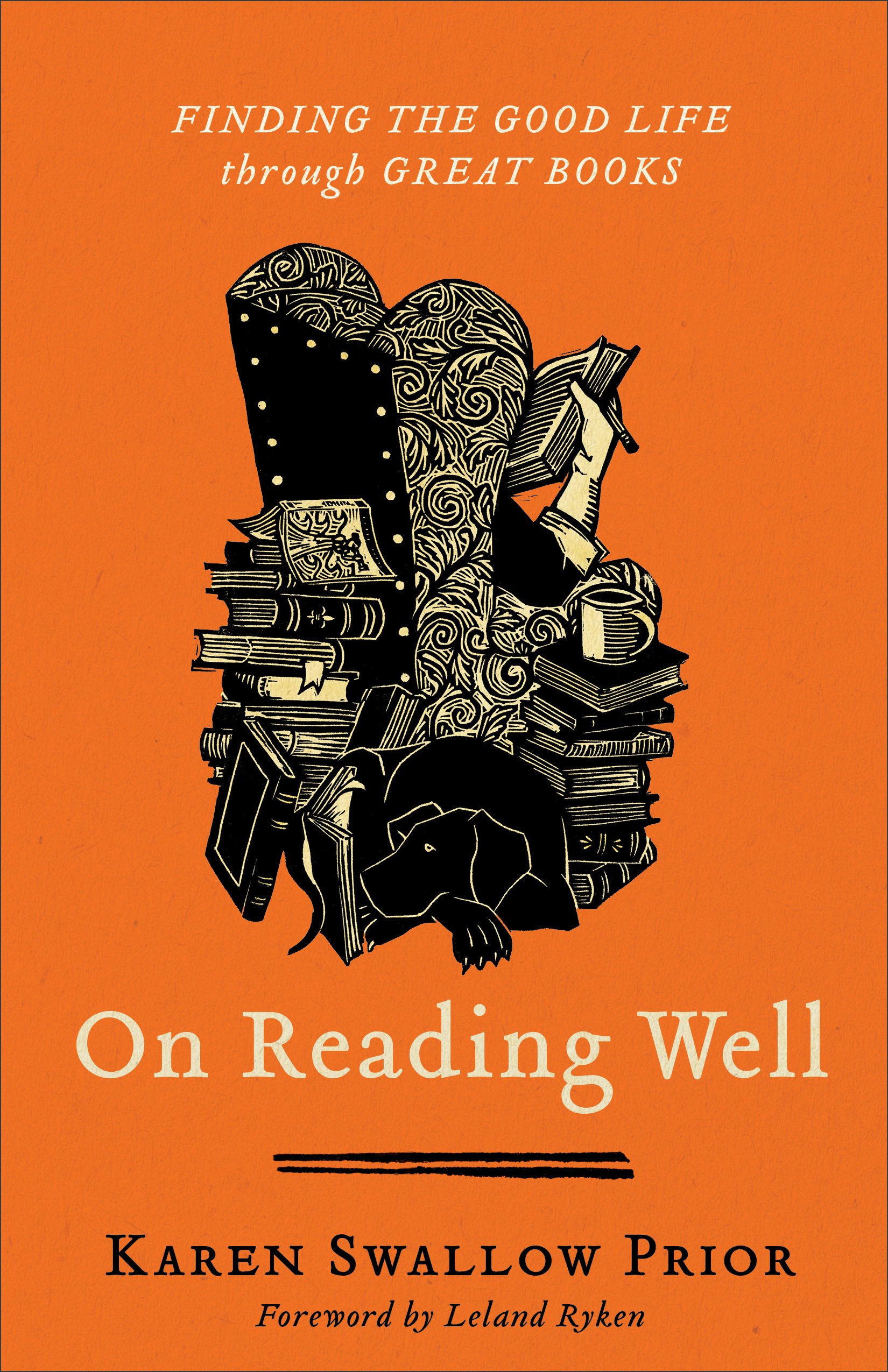
On Reading Well by Karen Swallow Prior

This book was such a joy to read, being both interesting and easy to read as well as inspiring to immediately go out and read lots of other books! A few weeks ago, I posted about the introduction of this book, in which Karen Swallow Prior lays out her argument that reading (of the sort that thinks and assesses the content) is good for developing virtue. In the main body of the book, she takes 12 virtues (the cardinal virtues, the theological virtues, and the heavenly virtues) and considers each one in light of a particular work of fiction literature. 

While we could probably take just one work of literature and consider what it has to say about all 12 virtues, I appreciate that she wanted to give the broad spectrum--this book is essentially a lesson on how to look at books from a variety of genres and how to open ourselves to be changed for the better by the goodness and badness we find. She also helpfully considers what each virtue really means and looks like, seeking out clarifications through etymology and other uses of the root words. 

Also, in taking a different book to look at each virtue, Prior shows how we can apply this kind of careful reading to every genre. I certainly have my favorite genres, and she even write about two of my favorite books (A Tale of Two Cities for the virtue of Justice, and Persuasion for the virtue of Patience.) But she considers authors and styles that are widely different, which has since inspired me to look forward to trying out each of these styles, if not each of the books that I haven't yet read. The earliest work is from the 17th century--Bunyan's Pilgrim's Progress which is a Puritan allegory that she uses to think about the virtue of discipline. For more modern works, she uses George Saunders' short story "The Tenth of December" to talk about Kindness. In between we have F. Scott Fitzgerald, Cormac McCarthy, Mark Twain, Tolstoy (along with Dickens and Austen whom I already mentioned), Edith Wharton, Flannery O'Connor, and Shusaku Endo. 

It would be impossible to even summarize the points of each virtue for each book, since that is what Karen Swallow Prior has done in this book.... and it is a book! I can, however, summarize some of my favorite points and mention a few things that I disagreed with. 

The chapter on Faith (which looked at Shusaku Endo's book, Silence) was particularly helpful to me in realizing the danger of pride as we "work out our faith in fear and understanding" as Paul says in Philippians chapter 2. We conscientiously seek to know God and understand what he would have us do.... and before we know it, we can find ourselves looking at other people and thinking, "why aren't they doing what I'm doing?" (Perhaps not expecting them to do the very things we are doing, but we suspect that they aren't seeking God's will the way that they ought to.) I read Silence when I was in college and hated almost every moment of it. And in a way, I felt a bit validated in reading this chapter, because Prior speaks to the discomfort of the subject matter, as we see first one and then two missionaries to Japan apostatize and then become assimilated into Japanese culture. And the central question is, "do they have saving faith? CAN they have saving faith?" And there is no way to read the book and come out saying a positive "yes" or "no." Which is what frustrated me! But Prior points to this as the power of the writing, taking away the pride of the reader. We don't and we never will have the power to say decisively: this person is damned. But we can look at our own faith and say: is this real? And we remind ourselves that this is not our trial...but should it ever become ours, we borrow more words from Paul in Philippians and pray and ask God fervently that "with full courage, now as always, Christ will be honored in my body, by life or by death." 

This chapter on faith, by the way, did not make me want to go re-read the book again. (Perhaps the only one that didn't do that.) I think I still have an almost visceral repulsion to this story, it is so horrifying and unsettling. But I appreciate so much that I now feel like I have gotten the point (or at least one of the points) that I should have seen when I read it 10 years ago. 

Another favorite chapter was on the power of kindness. First, Prior draws the connection with kinship (among other things.) And through the story of Saunders' "Tenth of December", she draws out the power of treating other people like family. We love them, understand them, seek to understand them, and are careful about what we say (or should be), knowing that as family, we might hold more power over their emotions than we ought to. Kindness doesn't always have to go to this extreme, but there is a care and concern at the heart of it that can be directed toward anyone, even the passing stranger on the street. There is also an essential connection between kindness and truth. There is no way to separate the two. "Niceness" is different. Even the etymology of "nice" has an association with ignorance and lack of understanding. The story itself shows a meeting between two strangers in the woods--an old man who is terminally ill and preparing to kill himself, and a boy out pretending "rescue the damsel in despair". They meet, and they are kind to each other, showing concern for the other's health and basic needs. The result of this everyday sort of kindness is that the old man is revived in his desire to live (a sad irony, since he is terminally ill and now must consider the tough days in front of him.) Both he and the boy realize that they were living in a cloud, imagining things that weren't true. Because of their chance meeting in the woods and their kindness, they see the truth more clearly and are ready to meet life with their "eye's open" and ready to appreciate it.

Throughout the book, Karen Swallow Prior has a roughly Augustinian approach to virtues, understanding that they are a mean of behavior or thought between two extremes, which are considered to be the related vices. And throughout the book, I have taken some issue with this... sometimes with the extremes, and sometimes with the whole framework of a virtue being the middle ground between two vices. One example of this is the way she writes about patience. I love much of what she had to say in the chapter on Persuasion (it is, after all, one of my favorite books!) A helpful one-liner that I took note of was, "patience is not passivity, but perseverance." Part of her understand of patience is that it's "a willingness to endure suffering." This is linked to the following idea that if there were no suffering, there would be no need for patience.... which I don't think quite lines up with a normal/everyday understanding of patience and suffering. We have often told our kids that "Patience means waiting without whining or complaining." Perhaps if you have a very soft understanding of suffering, waiting for something could qualify.... but no, waiting in and of itself is not suffering. Now, I do agree that all moments of suffering require patience, but I don't think it follows that suffering must be present for a person to exercise patience. In reading Prior's assessment of the extremes associated with the virtue, I've probably become more set in my disagreement. She says that the vice of excess that is related to suffering is "wrath" (!) and the vice of deficiency is "apathy." And here is my objection: we are talking about patience! (not suffering) Excess and deficiency must be related to the thing in the middle! An excess of patience might result in apathy, but certainly not wrath and anger. And a deficiency of patience is.... well.... impatience. Impatience can sometimes (often does) lead directly to anger, but more closely shows an extreme selfishness and entitlement. She does end the chapter the with extremely helpful and succinct comment that "patience has often been considered a sub-virtue of courage." 

In spite of my disagreement about the framework she is setting up, I have found  most of her thoughts on the actual virtues to be wise and inspiring. I appreciate the many, many references she makes to other writers, theologians, and philosophers. And most of all, I have a better way of reading and practicing virtue at the same time--truly learning to be by doing one of the things I love best: immersing myself in fiction and literature. 


Wednesday, November 14, 2018

A healthy diet of fiction

I'm currently reading a book called On Reading Well, by Karen Swallow Prior. This is certainly not my usual realm (which I can confidently say is either literature or children's fiction) but rather a dabble into literary criticism with a Christian twist. This book in particular, has the distinction of being an argument for the moral benefit of reading fiction. (Which is not too common today, especially among Christian circles.) So I refrained from writing another book review this week, partly because it seemed a bit much to review books by the same author three weeks in a row, and partly because I'm well into the middle of a book about reading, that I would rather share with the world at large. 

While I'm not at all trained in literary criticism, I have read other books about writing and about assessing the strength and value of the writing that we read. I'm also fairly well read, in the sense that I have read quite a lot and I can articulate both the good and bad points of the books I read. And not having been classically trained in literary criticism, it feels rather validating that in reading this book, my common-sense approach to determining what is good and bad seems to be upheld. (Though this style of literary criticism is considered, at best, quaint in these modern times.) 

Good fiction makes us want to be good people. There. Now isn't that quaint? But it's true.... 

This is what Karen Swallow Prior argues so compellingly in her introduction. 

Virtue is desirable for a good life. And virtue comes, not from knowledge, but from practice. Knowing what is virtuous doesn't make us so.... it's acting virtuous that makes us good people. And how do we learn to act virtuous? By being placed in circumstances where we must choose between right and wrong and we succeed in choosing right. And how do we know what is right and virtuous? Perhaps a couple ways: one way is to call to mind an example that you admire of virtuous behavior. We imagine, "what would so-and-so think or say or do in such a case?" This is the benefit of history. We can think of a specific example with personality that inspires us and with which we can sympathize in their victories and defeats. A second way to know virtue is from philosophy. We think hypothetically about what is perfect and to be desired above everything else in beauty and goodness.... and we form an ideal. 

This is what makes fiction so very powerful. Because fiction is the only place where the ideal (philosophy) can meet the picture (history). In reading a fiction story, we relate to the protagonist (and indeed, all the characters!) in their vicissitudes and we feel the pain of their bad decisions and the glory of their good decisions. We see with an almost omniscient eye the ramifications of their actions and the events leading to the fateful dilemmas that must change the course of their story. In essence, we are so emotionally invested that when we read a book that paints the world in strong and true colors (that show accurately the pain of 'bad' and the joy of 'good'), we are mentally practicing to make the same decisions in our own lives. 

If people become virtuous through practice, reading fiction is a way to practice making good decisions alongside the characters that we read about. Of course we recognize that we aren't really in the same situation.... and yet, we think through the decision as if we were. That's why it's a practice! And it helps train our minds and our hearts to desire to do well and to be worthy of greatness in the real world. Karen Swallow Prior also suggests that even though we aren't truly living out these situations requiring a turning toward right or wrong, we often aren't fully living out our own scenarios even in real life! Yes, we're living, and actually making decisions. But we often don't see (as we do when we're reading) the ramifications and ripple effects of the decisions we're making. We don't see all the movements around us that have brought us to this place. We don't see the history of many years condensed into a mere hundred pages that we have perused over the last couple days to give us a rounded and broad understanding of the virtues and vices that have come this moment to war over our souls. But! The more fiction we read, and the more we practice seeing these things in the books we read, the more we are ready to consider the story of our own lives with greater wisdom and discernment. 

This has certainly been true in my own life. I can easily rattle off a half-dozen fictional characters that have literally changed the way I think and live simply because I have read and re-read and loved the books in which they are cast. And now, in being reminded of the value of their example, I'm once again inspired to search for more, and to be reunited with my old heroes that have brought me to my current place and still have much to teach me. If you don't have fictional heroes, you are missing out on a very great blessing and help toward finishing your own story well. 

Saturday, April 4, 2015

Trinkets

Almost daily, I look around our house and think to myself, "Is that a trinket of frivolous utility?" 

Being married to an economist (and an Adam Smith scholar to boot) does come with some advantages, one of which is a fountain of fantastic and useful phrases from Smith's incredibly eloquent writings. It interested me that Smith's category of "trinkets of frivolous utility" includes many things that people spend their whole lives pursuing--large houses that they then have to maintain, expensive or gas guzzling cars that are more trouble than they're worth, he even goes so far as to say that "wealth and greatness are mere trinkets of frivolous utility." The lifestyles of the rich and famous...they ever fail to give fulfillment. 

So I have found myself, as we prepare to move this summer, gradually packing up boxes and wondering how many things in my house are trinkets of frivolous utility. 

Trinkets, I've decided, are things of small ultimate value. So something might be expensive in dollars that is not truly and ultimately valuable. Likewise, something might cost very little, but be immeasurably valuable to me. In fact, some things, the most valuable things cannot even be considered in terms of money--money then, is surely not the best gauge of value. ('Utility', by the way, is the economist's word for an individual's reckoning of 'value'.)  I am reminded of the passage in Isaiah 55: "Come, everyone who thirsts, come to the waters; and he who has no money, come, buy and eat! Come, buy wine and milk without money, and without price." How valuable is this water? Or this wine and milk? There is no price, and there is no money... how then do we decide? 

I have come up with a list of questions based off of what we value as a family in order to help me determine what is not a trinket...and the rest are generally assumed to be frivolous. Here are a few of the questions: What does it remind me of? Is there a special memory in this thing--one that is worth remembering? Does this thing make me thing about God, and his glory, and does it engender gratitude and thankfulness in my heart? Is the thing useful for our family, helping us maintain order and peace at home and to be hospitable? Is it a thing of beauty that never fails to delight me? Is there a high cost to storing or keeping such a thing? 

There is an astonishing, appalling number of things in our house that are both cheap and frivolous and have storage costs! (By which I mean that they take up valuable space and crowd my brainwaves with their clutter.) I've found (and since disposed of) heavy paperweights that I've never used and never thought particularly beautiful or meaningful! I've found books that I've half read and didn't like, but kept because I categorically like books. I've found clothes that I got for free in college and never fit me very well, and I've worn once in the past eight years. But not everything has such an obvious answer. There are things I'm still undecided about--what about the basket of seashells we got from Paul's grandparents in Florida? They remind me of them and their house. They are beautiful in and of themselves. And yet they take up space and get dusty, while there are other things that remind me of our grandparents. I have a small trophy from winning an honorable mention in a piano competition in high school--only a couple years after I starting taking piano lessons. Is it worth keeping? 

For these last examples, there are both pros and cons to keeping them. For both, I can think of what God has done or given me, and his steadfast love and faithfulness, and be grateful. And yet I might say that they don't cause that train of thought instantly, when I look at them. (Do I look at them? Good question to ask...) I am still unsure of how valuable certain memories are...they are certainly not all equal in value!

But it is a helpful question to keep asking: "Is it a trinket?" Because even if I am not sure of the answer now, if I keep asking, then either I will someday see the thing as very valuable and rejoice over it; or I will finally acknowledge that it has served a purpose and now is not worth keeping. I hope (and expect) that I will continue asking this question as we move into a new place, as our family grows and changes, as our eyes become more and more fixed on our Heavenly home. This is the goal. That which draws my eyes toward Heaven, and firms my resolve in trusting the One that will bring me there safely, will also show me more and more clearly the trinkets of this world for what they are. Such are the things worth keeping.

Saturday, August 2, 2014

Kate and Crew 21: On Christianity and Culture

21. On Christianity and Culture (May 2014) 

          Kate and Mister liked to read books aloud to each other. Kate couldn't remember when this started, but it had always been a sweet way to share something and get a good conversation going. So far, they read twenty or thirty books together, mostly childhood favorites including the Anne of Green Gables series (Kate's choice, obviously), and the Pendragon Cycle by Stephen Lawhead (Mister's childhood equivalent.) This summer, the adventurous couple planned to branch into non-fiction for the first time. Kate was generally opposed to non-fiction reading on some kind of principle, but for this summer reading list, she made an exception since it was a topic she found fascinating and compelling. 
          Perhaps she found it compelling because, at the core of the discussion, lay reasons to choose some books over others...or movies, or games. It involved thinking about what was good food to eat and how much and why. In short, it was a discussion about how to live life--all of life with its many nuances, changeableness, and decisions--in a way that is distinctly Christian. And this was a discussion that she and Mister had been having since early in their marriage. Usually, their conversation focused around their entertainment and finding truly good things to do with their leisure time. When could they decide when one thing (watching a movie, for example) could really be identified as the best thing to do? Their search was not for some proscribed formula, but for a method of thinking, a structure through which they choose from their options not just what they want in the moment, but what is lasting and meaningful and good. 
          Of course, they understood the answer to be different depending on stage of life and circumstances (there was certainly a marked shift when Teddy was born!) But still, they desired to continue the dialogue, with each other and with their friends, seeking to understand how (and if) their Christian peers answered this question of what to do with our leisure time as Christians in modern American society. And out of this discussion was born a themed reading list on Christianity and culture. Among the favored titles were Christ and Culture, a classic from the 1950s; Temptation: Self-control in an age of excess, a secular consideration of the importance of self-control; Popcultured, a Christian book focused on style, media, and entertainment; and Dancing in the Dark, a similar collection of essays on youth, pop culture, and electronic media. 
          Their first pick (as being the broadest and most foundational) was Niebuhr's Christ and Culture. Kate and Mister found it to be slow going, trying to read aloud such an academic work. Almost after each paragraph they would stop and discuss some element of his argument. But they appreciated the thoughtful language, charming turn of phrase, and most of all Niebuhr's attempt to lay out five distinct responses to the question "how should Christians interact with the world's culture around them?" Though they were certainly possible responses, the first two weren't terribly helpful for their own questions. 
          Kate simply mocked the first, radical response which posited that Christ was against culture and Christians should have nothing to do with it. "That's just silly." she said, in her artless, tactless way. "After all, one just can't get away from it. Even if Christians go off and live by themselves, they still form a community with a culture of it's own and it is still based in some respect on human considerations--like eating and sleeping and manners and...." 
          "Okay, okay." Mister calmed her, "I agree with you! And I think Niebuhr does too...just keep reading." 
          Kate was equally outraged at the next option: Christ of culture. She complained, "It's as if these people think that culture is the most important and that Jesus is just around to show us which are the best parts of culture!" 
          Mister nodded again, "Yes, this view is not really a Christian view. I like what Niebuhr says about them thinking that the enemy is Nature, and that God is helping mankind overcome and purify Nature....as opposed to God overcoming the sin within mankind. They seem to completely ignore the fact that people are sinful and need to be saved." 
          The other three "responses" were much more palatable, mostly in agreement with each other, with only degrees of difference. The "Christ above culture" view considers that God institutes and sustains culture, which means that it's not wholly bad...True, thought Kate...and that there are varying degrees of goodness or evilness in the cultural forms of the world...No, she thought, there's nothing inherently more holy about being a minister than a trash collector. And yet, it's good to recognize that cultural things can be God-ordained and sustained--but, as with governments, that does not make them perfect or righteous. 
          The Christ and culture perspective resonated the most with Kate and Mister, and presented the paradoxical view from the New Testament that people need to live in the world but not of it. Interaction with culture is a necessity, but conformation is not. And yet this view seemed to lead to a static, conservative response--not really responding to or trying to change culture at all, but merely trying to keep the status quo from becoming more evil. 
          Kate wanted to join this with elements of the last view, Christ as a transformer of culture, which says that Christ is involved in every area of our lives and being so, Christians can expect to make a difference as they attempt to redeem various parts of their culture. But if taken to the extreme, this view started sounding universalist--as if God was going to transform and perfect people and cultures here in this life, saving one and all with no condemnation for those who reject him. 

          This was Kate's Mother's Day: after a delightful visit to their old college church, they took a beautiful drive to Ft. Wayne, where they had lunch with some college friends, who were eager to dive into moral and philosophical discussion. Then they continued their drive to St. Louis as they read. And as Kate and Mister talked and thought, they got more and more excited about their growing family. 
          "This would be a great book to read again every five years or so," Mister proposed, "and what would be really fun is to get together with James and Kelsey and the Howards to discuss it!" 
          "Ah! SO fun." Kate exclaimed, and wondered if they could really try to make that happen. "It's definitely a great topic to think on as our family grows and we start deciding 'family policy' about different things. It would also be a great book to go through when our kids reach high-school age!" (Kate was already drawing up essay questions in her mind for Teddy's homeschool curriculum.) "I think it would be wonderful to have--in varying forms, of course--these conversations with them as they grow and start thinking more independently about clothes and activities and what they do with their play time." 
          "Certainly. It's a discussion Christians should have more often, not just with their families! Too often, Christians in America are content with pursuing the 'American Dream' along with everyone else. We need to be careful and always consider just how we're called to be set apart; and then of course, have ready answers for why we choose to live differently." 
         We're set apart. Kate mused happily to herself as she looked at the passing fields and fluffy clouds. It's what make life secure even when we don't know the future, and an adventure even when every day seems the same. God has a beautiful, exciting plan and a good purpose behind everything, and that is SO comforting and fun. 
          Aloud, she said, "This is SO fun. Maybe we should take road trips every year on Mother's Day!" 

rest stop on the way to St. Louis

Friday, September 21, 2012

A Thought about Individualism from Romans

For those that don't know, I grew up in Alaska. It's a great place, and one of my favorite things about it is how free the people are to be themselves. I think individualism became a kind of ideal for me, and perhaps it's a state of being that is easy for me to idolize. I can tell because whenever people try to lump me in some generic group, my entire being screams out to correct them in some way. I want to be in a category by myself--I don't mind being associated with people as long as it's clear that I'm different in obvious and important ways. (This is how I feel when I'm idolizing my individualism.) 

I started thinking about this again this week because Paul and I started doing a Biblical Counseling (as in, learning how to do it...) small group at our church, and this last week's lesson stepped on my individual toes a little bit. Or at least I thought so at first. 

Within the lesson was an exercise thinking about our relationship with Christ, the assets he brings to the relationship, and the "assets" that we ourselves bring -- and how they are really not assets but liabilities. I understand this. I don't have a problem believing that everything good about me that I bring into a relationship can also be a bad thing. 

But if all Christians bring nothing positive into the relationship and if Christ fills all, then do we all have the same identity in Christ? (Here my individuality gasps for air.) After meditating on Christ's work in us, I am satisfied that we do in fact, still all have an individual nature. 

In Romans 8 (which I have recently finished memorizing) it talks about how our bodies are sold under sin--it is our physical nature, which is still in bondage to sin, that makes our assets into liabilities. But when we put our faith in Christ, he gives us his Spirit (a sort of down payment on the full redemption to come)--so that although our body is dead because of sin, the Spirit is life because of righteousness--his righteousness. This is the same righteousness he gives all his children. And we aren't perfect right now, but we await (with eager longing) our adoption as sons, the redemption of our bodies. This will be the completion of our salvation. 

So that means that our physical bodies, which includes all our quirks of personality, talents, and preferences will be redeemed in the end. They will be made perfect as our Lord Jesus is perfect. And because of that, we will not all be the same! Because of the perfection we will receive when we are reunited with Christ, we will never use our "assets" as "liabilities". And it is this hope that I can long for! (The hope of one day being more completely myself than I've ever been--with all my personality, but being perfect. Never doing the evil that I hate, and only doing and loving good.)

Of course we do not have this now (obviously...no one's perfect.) But we can hope for it. If we had it now, we wouldn't be hoping for it. But since we don't have it...but we have the promise of it, we can hope for that day to come, believe in it, and wait for it with patience. 

Thursday, March 1, 2012

Why Contraceptives Aren't a Woman's Right

While the battle rages over who should provide free contraceptives to women, I think many people forget to think about why such a thing should be done, and whether it should be done at all.

I've heard many of the usual arguments: contraceptives are an important "health" benefit that many women can't afford... the better, more expensive ones aren't just for contraceptive purposes but also hormone imbalance, etc. There are a boatload of arguments that people throw out, all trying to help you swallow one bottom line: Women NEED contraceptives...not only need, but it's our right. 

Both things are wrong. Women don't need contraceptives. And it is not our "right" to have them. A simple argument for the first point: women don't need to have sex. Therefore, women don't need contraceptives. Now, if a woman is going to decide to have sex anyway, that decision is completely on her, and she should think about the consequences that may happen from that action. This is a lesson people start to learn as toddlers: every action has a consequence, and you have to learn to anticipate, expect, and prepare for them...on your own. If someone isn't mature enough to understand this, they probably shouldn't be having sex.

I really hate it when people tell me what to do. And this is how I feel when people start talking about legislation that requires something to be provided to all people of a certain type for "free" because when you really get down to it, any handouts that are going around are coming out of the taxpayers pockets. And as someone with a "private" business of teaching piano students, I get taxed at some ridiculous 30% of my earnings...which gets me pretty huffy by itself, not to mention when I start considering what it gets spent on! I don't have a problem helping people out on my own initiative, but I like to make my own decision about to whom I give.

The other thing that really bothers me about this issue is that people are getting all offended on my behalf (as a woman) when I really don't want them to. I would like to make my own decisions about what I need or don't need and then deal with my own consequences, and everyone (meaning everyone impersonal--read: government) can just get out, thank you very much. But how can someone make an argument based on their own personal preference? If someone says, "I think my boss should give me condoms for free" they just sound like a entitled moron. But apparently, if they say, "All women should be provided contraceptives free of charge," people will actually listen and even applaud. Unbelievable.

Now some will say, "What about women that are raped and didn't actually make her own decision?" Well, that's truly horrible and the man who did it should be tarred and feathered (not literally, but that's my gut reaction.) But such a circumstance still would not make abortion or contraceptives a woman's right. How can someone have a right to something that forces action from someone else? We can't! Because if that someone else doesn't desire to perform said action, and then is compelled to because it's my right, we have a case of forced action--which is also called slavery. The contraceptive issue definitely falls into this category because it is a tangible thing: if I lack it and it is my right to have it, then someone somewhere must provide it for me. My point is that we (and the government) should never try to compel anyone to serve someone else (or ourselves) in a particular way...for free, or for pay.

Saturday, February 25, 2012

What I'm Doing

As a housewife in the D.C. area, I get a lot of strange looks and the awkwardly phrased question, "So...what do you do?" Often, there is a badly veiled connotation that the speaker believes that I don't really do anything. I've even had people say these very words: "Don't you get bored sitting around doing nothing?"

I just laugh and tell them....

First of all, I'm being a housewife. People don't realize how totally awesome this is. Because I have flexible hours, I can babysit, go to Bible studies, meet up with friends, etc...in a totally fluid, not exact, often spur-of-the-moment schedule. I relish it! This also means I try to cook a lot. Since I (in my totally fluid, not exact, spur-of-the moment nature) don't use recipes... and when I do look at them, I never follow them to the letter, I often get in a rut of cooking similar things for several weeks, and then move on to something else. I'm grateful that Paul never complains, and he always seems to think it's better than what he would have made on his own.

Also, being a housewife means that I feel responsible to do a lot of the chores around the house. On the whole, this wouldn't be such a bad thing if I weren't so irresponsible. Clean the bathrooms? I say.... oh yeah, they definitely need to be cleaned....right after I finish reading this chapter....and the next one....and the next..... So cleaning and picking up are things I struggle with. When I really get going, I enjoy them and it's satisfying work because the difference I make is really obviously apparent; it's just the getting started that is SO hard. But again, Paul is gracious....and prods me on to love and good works when another month goes by and the kitchen still hasn't been mopped. (yes, that's probably the priority on the cleaning list right now.) A few other things that I think fall under the privilege of being a housewife: working in the backyard to get it ready for planting, grocery shopping, laundry, sewing, scrapbooking, decorating, and occasionally setting up or hiding surprises. I'm so glad I can have this life--it is full and varied, and I know I'd go crazy if I had a regular 9-5 job where I knew what was going to happen every day.
But, believe it or not, my life is even more full! I am also a piano teacher. Without taking the time to count, I think I have about ten students. So it's not a lot, but enough to feel like I'm beginning to understand how different students need different styles of teaching. My students' ages range from 5 to 11...so that explains some of the need for different styles as well. I enjoy it though, because almost all my students are really excited about their lessons and really practice over the week. I see them all improve quickly, and it's a joy to my heart to be able to teach them something that I loved learning.

Lastly (and this is probably the most exotic) I spend my time writing. For the last year and a half or so, I've been working on writing children's chapter novels. I've finished one draft, which I'm calling Home in America, and am currently editing the manuscript and trying to prepare it to submit to a list (still being developed) of children's book publishers. This first novel is a mid-grade (8-12) family story about a little girl (8) who has to deal with brothers, school, and friends. Through funny, interesting, and heartfelt situations, she learns to be herself and sees why her life in America is so wonderful. (no, she is not an immigrant...."native" Americans can learn to appreciate their home as well.) The second story I'm working on, which I've set aside half-finished in order to complete this first is a very different sort. It's a young-adult fantasy dystopia about two opposing city-states and a teenage girl's quest from one city to the other to find her missing father. It's a really fun adventure story, and I'm excited to get back to it when I'm done with Home in America.

Also, you may see that I spend quite a bit of time reading. I do this because I love it, but it's also my form of research. I like to read old classics pretty much just for fun. But I delve into the children's/YA genres to see what the trends are in story-lines and analyze how different authors use dialogue, description, and foreshadowing techniques. It's so fun and interesting...and it's something I've wanted to do my entire life.

So when people ask, and I go on for about fifteen minutes telling people "what I do", most of the time, the condescending looks slide off their faces and are replaced by often inspired, kind of jealous looks accompanied by the words, "That's so awesome. I wish I could do that too...."

I mean really, who wouldn't want to be a housewife?

Thursday, February 16, 2012

A Lesson from Jane Austen

I just recently finished Jane Austen's Persuasion. Having read most of her books, and come away from nearly all of them delighting in their language and wry sense of humor, but looking down on their social life as meaningless, I was surprised to get a different impression from this book.

The story bears the predictable similarity to all her others, and yet I enjoyed it more because Anne, the heroin, is less effected and mortified by her family's frivolities than say, Lizzie and Jane Bennett. (My aversion to hopeless awkwardness and impropriety is enough to make me skip certain sections both of the book and the movie of Pride and Prejudice.) So that was the first thing in Persuasion's favor.

The next thing that I appreciated, I think I may have scorned until now. And that is Austen's presentation of the virtue of contemplating propriety. I think on the whole, it's usually annoying to me to read how characters just sit around wondering whether they should do this or that...whether they should disclose this or that "sensitive" information to such and such a party. And heaven forbid that they should let their "violent" emotions show when present with truly astonishing information. But I think my feelings have changed somewhat in this latest Jane Austin reading.

Certainly, there is an enormous contrast between that kind of mental lifestyle and that of today's society. Now, people commonly recommend "being yourself" or "being honest" with no thought to propriety. You want to let out a big belch at a cocktail party? Sure...it's just being yourself. You want to be friends with the pretty, popular girls and ignore the one who is frankly horrible at playing the pianoforte? No problem...it's just being honest. Today's modern society has effectively brushed aside all consideration for the other person and constantly asks of us, "How do you feel?" and recommends, "Don't pretend to be anything other than your natural, horrible self."

And I do think that Jane Austen's society may have carried the concept of propriety a little too far. But I also think she would agree with that. For Jane Austen, I believe, valued sincerity just as much as our modern authors, and yet she effectively illustrates in her novels that sincerity without decorum (Mrs. Bennett sincerely wanted her daughters to marry rich men, and Mr. Elliot in Persuasion sincerely valued his own beautiful appearance) is quite as bad, or worse, than decorum without sincerity (take a look at Mr. Wickham or Mr. William Elliot).

The lesson for me was (is) a simple one: there is virtue in sitting down and contemplating propriety and what it ought to look like. For me, it doesn't mean trying to revert to Victorian norms (heaven forbid!). Nor does it mean going with whatever people say is right or okay in the latest fad of self discovery. Instead, I think it is important (for Christians at least) to really consider the principles laid out for us in the Bible, which gives us fairly clear guidelines that we can apply in a number of different cultural settings. What are some of these? Consider others as more important than ourselves. Don't gossip or slander. Build each other up and edify each other by speaking words of spiritual truth (as opposed to the "truth" that I might happen to hate your guts.) Dwell on what is pure and holy and blameless. Be quick to hear, slow to speak, and slow to anger.

I could go on and on and on...there is practically no end to Biblical advice on how to interact with other people, both Christian and non-Christian. So while finding the advice is easy, I think it may be valuable for those of us raised in a "just be yourself" society, to spend more time contemplating how it should change our behavior and make us more thoughtful of others around us.

Tuesday, June 14, 2011

Something New I Learned Today


When I discovered that it was only in the low 70s this morning, I decided I might as well be outside while I could! So I walked down to this monument, which is where I go when I'm not sure where else to go. I knew a little bit about the monument and it's significance, but as most things do over time, it all seemed jumbled up in my brain. So I took some time and read all the different plaques that are posted around the memorial and learned some interesting things (that I probably already knew.) 

For those of you who are WWII buffs, you'll probably think this is abysmally simplified, but this is some basic info about the Battle of Iwo Jima and how there came to be a gigantic monument down the hill from my apartment. 

Iwo Jima is a little island south of the main islands of Japan. In 1945, it stood about halfway between Japan and the US base on the Mariana Islands. Because it was such a long way from the Marianas to Japan, there was no way for damaged bombers to make it back if they were hit by Japanese artillery. So Iwo Jima turned out to be a perfect stepping stone to get to Japan, and on Feb 19, 1945, the battle began. 

The Japanese surely realized how important the island was for the allies, and defended it fiercely. There were about 70,000 American troops, fighting about 21,000 Japanese on the island. One might think that the battle wouldn't last long--especially after this flag was raised on Mount Suribachi on Feb 23, just a few days after the battle started. But the Japanese dug their heels in and fought for another month, finally surrendering on March 29, 1945, after nearly 7,000 Americans and almost 20,000 Japanese died in the struggle. 

Joe Rosenthal was the news reporter who took the Pulitzer Prize winning photo that inspired this sculpture. Felix de Weldon made and cast the sculpture with his assistants. And in case you're wondering how he made a sculpture of 4 men from just one photograph, he didn't! Three of the men that originally raised the flag lived through the battle, and sat as models for de Weldon. The men in the monument are 32 ft high, and the flagpole is 60 ft long--hard to tell from a photo, but the monument is unbelievably huge. (If you look in the top photo, there's a man standing on the far right, and you can see how very small he is compared to the statues!)

All in all, the monument cost about $850,000, all paid for by donations from Marines, navy men, and friends. The Memorial was dedicated in November 1954 by President Eisenhower.

Monday, February 28, 2011

If you like Moulin Rouge, then you might like...

...Opera? I know, you're probably thinking, "But Moulin Rouge is nothing like opera!" Ah, but it is! Moulin Rouge follows in a long line of glorious musicals based off of operas. In this case, it's rather surprising how faithful this show is to its parent La Traviata.

La Traviata was written by Giuseppe Verdi in the early 1850s and was, in turn, based off of a play written by Alexandre Dumas (this is the son of the Dumas we know as the author of The Three Musketeers and The Count of Monte Cristo.) Literally translated, the title means "The Fallen Woman" and after a brief synopsis of the plot, I believe you will no longer say that the 2001 musical is "nothing" like opera.

The opera is performed in three acts. In the first, we are introduced to Violetta, a Parisian courtesan. In her salon, she meets several newcomers including the wealthy Baron Douphol and the young Bohemian, Alfredo, who extols the virtues of love. After she has a fainting spell (which she covers well) she goes to her room, where Alfredo finds her and confesses his love in beautiful and stunning song. Violetta struggles between her desire to believe in love and her desire for freedom, but she continues to hear the echos of Alfredo's voice.

In the second act, Alfredo's father learns of their affair and insists that she leave his son, claiming that their relationship is endangering the legitimate wedding of his daughter. She leaves, writing him a farewell note and reminding him that she loves him. But when he finds out that she's gone to a party given by one of her courtesan friends, he suspects that she has given him up for another lover. Alfredo goes to the party and is bitter and angry when he sees Violetta with the Baron. They play cards and the Baron loses a small fortune to him. Fearing for his life, Violetta urges him to leave; but he misunderstands! He accuses her of loving the Baron, denounces his own love, and throws his winnings at her feet. Alfred and the Baron duel.

Winding up the opera, we find out that the Baron was only injured in the duel and Alfredo now knows the truth about Violetta's love and why she left. She is dying of tuberculosis, but when Alfredo enters her sickroom, they ecstatically plan to leave Paris and make a new life on their own. With one last gush of vitality, she feels a resurgence of strength and gets up to join Alfredo....only to fall dead at his feet.

Now honestly, as far as the story goes, we might as well just change the names to the Duke, Setine, and Christian and call the thing Moulin Rouge. As for music, there is an appropriate variation based on the century and a half between the two productions. And yet, Verdi's music is gorgeous and melodic and since rewatching the opening drinking song when I woke up this morning, I keep humming it to myself. I've seen the particular version that I linked to, and remember it being quite good.

Anyway, the point of this post is that many people view opera as elite and unreachable--from a different world, so to speak. But in the 19th century, opera was the entertainment of the masses, and our current entertainment draws heavily from the foundation that opera built. If you try it sometime, you may be surprised how much you like it and how similar it seems to more modern entertainment. And if you'd rather watch a more comic opera, I'd recommend the Barber of Seville by Rossini. It's one of my favorites.

Thursday, June 10, 2010

Under the Surface of The Music Man

There is hardly a more dangerous place to turn off our brains than in front of a television. This is not because we can freely and mindlessly accept attitudes and moral judgments in other areas of life, but rather, we must be more careful in front of a television because it is exactly there that we are inclined to stop thinking. The danger is that all the writers, directors, and producers of everything that goes on television know that the vast majority of America's population sits in front of the tube so they can be entertained without having to think. And they say to themselves (rightly so) that this is the media to use when they want to get a message to the world and change people's minds. Even commercials can be an attack against the principles many people hold dear. They say: "You may not even know you want this, but you need it. You ought to have it. And what's more, you should enjoy it by buying it with someone else's money if you possibly can. Everyone will admire you if you do."

Movies and TV shows are much more subtle. It is so easy to mindlessly enjoy them; to vicariously live and have adventures through the characters on screen. We imagine what it would be like if we were doing and saying the same things with the same consequences. And in this way, modern movies can edge their way into our minds and skew our perception of good and evil, modesty, true love, responsibility, faith, and finances. Old and new movies alike can present dubious images of reality that we are slow to recognize. However, I also think that many movies, new and old, have excellent morals and snapshots of truth that we can learn from should we choose to recognize and think about them.

For example: I recently watched the Music Man, an excellent musical from 1961. While there are many interesting comments throughout the movie on the American Midwest and small town social life, we find more worldview statements in how we see Prof. Harold Hill interact with the town. He is an unabashed con-man, come to sell boys bands and get out before they realize they've been swindled. He is undeniably good at what he does, but the movie paints his intentions as morally reprehensible and dangerous to his well-being. I can't imagine anyone watching the movie wishing that they were in his position. There is also an interesting commentary on mercy and love. For Marian (the librarian) discovered early on that Prof. Hill was a cheat, but decided to keep the information to herself because his influence had made her little brother happy after two years of ashamed lisping silence since their father had died. This was a judgment call on her part, and I'm inclined to think that it was the wrong one--she should have exposed him. But again, with such hardness do we often meet a merciful response to evil...unless it's toward ourselves. In the end, he is redeemed. The band comes and plays, albeit terribly, and the town is satisfied. (I'm sure I don't know why.) At first sight, it might seem that Prof. Hill is redeemed through his own works because many other groups of people in the town realized that he had done many good things for them. But this is not the case. It was ultimately the playing of the band and his care for Marian that made him stay that redeemed him. But he did nothing to help that boy band play and he certainly did nothing to earn Marian's trust and admiration. So, while there is some measure of open disrespect to authority (the comical Mayor Shin) and while one might doubt the wisdom of Marian's decision to trust the professor, we can certainly walk away from the film with the reminder that mercy is always unreasonable and redemption comes through mercy.

If you haven't seen it, watch it! And tell me what worldview statements you see in other areas of the movie.

Monday, February 1, 2010

A Lesson for the Church from America's past

I wrote my senior thesis on American musicals and how they reflected what it means to be "American." The musicals that I concentrated on were those from the 1930s (the earliest talking films) through the 1950s, though I did dabble a little bit in more modern musicals as well; though those were more for contrast to the ideals I found in the earlier films. There was element of Americanism that I was surprised to encounter nearly everywhere in these early musicals. It was surprising because it is not commonly thought of or appreciated in the same way as it was then.

The idea of a community in these musicals is inextricably tied to the idea of independence or individuality. Without going into lots of details and examples, I'll try to summarize the main thrust of what I discovered. Many foreigners come to America, and many little boys and girls grow up in America dreaming of what they want to do or become in the years ahead of them. And America has been known as the place where those dreams can come true if you set your sights strait and go for your goal with indestructible determination. In order to do this, people develop a certain set of skills that will allow them to work for what they want. People would often barter their skills for another's skills or the product of his labor. (For example, someone might mend a smith's fence in return for shoeing his horses... there are endless bartering possibilities.) This is how communities form. They are groups of people with complementary skills that rely on and help each other in a symbiotic relationship that allows each an opportunity to pursue his own personal goals. We need people. We can never do anything completely on our own.

These communities and the strength of the peoples' character is seen often in the towns on the edge of a frontier where there are no factories or big cities. People know each other and understand (sometimes learning the hard way) that they cannot survive if the community fails.

In an age when one can shop for everything online and essentially survive on other people's services and products without ever having to come in contact with them, it can be hard to understand the special power of these American frontier communities. People were held accountable to each other in their work, in their morals, in the raising of their children. No one had the option of shirking their responsibility. And when one worked hard and did well, they not only had the option of helping others, but it was expected and required in a way because the whole community would know that he did not succeed by his own strength alone.

The Christian church needs to understand how vital and powerful is this kind of community. By serving each other faithfully and working hard to develop our skills so that we cannot be accused of taking advantage of people, the church will develop a powerful system of trust, accountability, strength, ingenuity, and fun that will be markedly different from the rest of the word. It will be noticeable especially in modern society, and in our culture in particular, because people are fixated on "getting ahead" at the expense of one's coworkers, "looking out for #1" to the exclusion of all others, and taking all they can while giving as little as possible. Can you imagine a secular community today participating in a barn raising or a husking bee?

These events were not the imaginings of historical fiction authors. And their purpose was not solely to come together and "have fellowship." These were times when people did work together, freely, generously, and knowing that each person would have his turn of needing and contributing to the community help.

Paul talks about Christian communities in 1 Thessalonians and gives us many other instructions elsewhere. Speaking to the entire church of the Thessalonians, Paul says, "Now concerning brotherly love, you have no need for anyone to write to you, for you yourselves have been taught by God to love one another, for that indeed is what you are doing to all the brothers throughout Macedonia. But we urge you, brothers, to do this more and more, and to aspire to live quietly, and to mind your own affairs, and to work with your hands, as we instructed you, so that you may live properly before outsiders and be dependent on no one." Later on, he says, "We ask you, brothers, to respect those who labor among you and are over you in the Lord and admonish you, and to esteem them very highly in love because of their work. Be at peace among yourselves. And we urge you, brothers, admonish the idle, encourage the fainthearted, help the weak, be patient with them all. See that no one repays anyone evil for evil, but always seek to do good to one another and to everyone. Rejoice always, pray without ceasing, give thanks in all circumstances; for this is the will of God in Christ Jesus for you."

We are to love all of our Christian family, not just those we "click" with. We are to honor all of them, to serve all of them, to be generous and equally available to all of them, and we are to accept criticism from all of them (even those we don't know or understand as well) because we know that they have been chosen by God to live with him for eternity. There will certainly be idle, fainthearted, and weak people in the community. But we cannot simply throw them out saying, "you damage the image of our Christian community... Leave." Rather, it is a further opportunity for a testament to the grace of God to deal with them patiently and to never return evil for evil.... and to always be thankful.

How often do you complain? Do you notice when others complain around you? Do you join in? If you instead expressed your thankfulness and gratitude that your life is what it is, don't you think the people around you would notice and be astonished? Thankfulness, gratitude, contentment. These are rare things in the world today, much rarer than diamonds.

We are commanded to not forsake the fellowship of our Christian brothers and sisters. This is not a call to go bowling every Friday night with a "small group." And it does not mean meeting every Tuesday with the bridge club which is comprised of ladies from church. No. We are called to serve each others' needs, even to consider them as more important than our own. We are to know our Christian brothers and sisters deeply, rejoicing in their victories and sorrowing with them over their failures. One Christian all on his own will struggle and fight with sin a pain and doubts, giving (maybe) a tiny little flicker of a flame to the rest of the world shining just so much much light on the work and glory of God. But a Christian community should be like a roaring fire showing the rest of the world how we work together in love and generosity freely giving and humbly taking, generously bearing with each others' faults and working together to become more like Christ. That is not to say that Christians in a community will not struggle with sin. But the context of Christian accountability, exhortation, and forgiveness will improve a sinner's chance of resisting temptation while it also shows the world a Godly response to sin.

In our minds we can never compare our worldly lot with our neighbors who have rejected Christ without also comparing our eternal lot. We are members of a different world, and we should not read the same things, watch the same movies, laugh in the same way, or even smile or shake a hand with the same attitudes and thoughts as the rest of the world. We are called to be different and we must show the world what this difference is. It does not mean going to Wednesday night Bible study instead of Wednesday night chess club. It means living every moment knowing that someone died so that we could walk and breath and smell with all the excitement of the most rapturous love... And we can do that because we are walking and breathing and smelling (and living!) a new life in the ridiculous love of a God who created the earth and the air and every fragrance there is so that we could enjoy it and praise him for it. And this is how he showed his love for us, that while we were living, ungrateful and hating him for putting us in this beautiful world, he punished his own son for our evil. He loves us that much.

Of course we still struggle with sin, but praise God that our destiny does not lie in our own ability! We have such a great hope. Paul says this at the end of 1 Thessalonians: "Now may the God of peace himself sanctify you completely, and may your whole spirit and soul and body be kept blameless at the coming of our Lord Jesus Christ. He who calls you is faithful; he will surely do it."

Amen and Amen to that.

Monday, January 25, 2010

March for Life

Every year, there descends upon the capitol a great mass of people to protest the abortion of human babies within a woman's womb. The choice is a matter of the legal killing of a human life, and though many seek to redefine when life truly begins, hundreds of thousands of people gathered on the National Mall last Friday to reassert their belief that even unborn children have the "right to life, liberty, and the pursuit of happiness."

I arrived at the March a little late, getting off the Metro at Capitol South, near the Supreme Court building, which was the destination of the March. Around 2:30, the first people were passing the Supreme Court. The 5 lane road was packed, with people walking on the curb and in the grass all the way from the front of the line at the Supreme Court down to the rear by the Museum of Natural History. There were enough people present to make up the population of a small state. Unfortunately, I only saw one news crew as I "swam upstream" against the current of the march to the end of the line where I met friends from my alma mater. Seeing the vast majority of people in the March, by walking against the flow, I noted that most marchers were younger women, students, and that I've never seen so many strollers in my life. One particularly moving demonstration was a mass of men and women in black carrying a variation of signs that said, "Women DO regret their abortion" and "Men DO regret lost fatherhood." These signs replaced "Women" and "Men" with "I". These men and women were marching with a great burden of regret on their shoulders, bravely declaring that they have done the thing which the hundreds of thousands of people around them (including themselves) were denouncing as morally reprehensible. My heart ached to see the signs and the number of people who have brought this sadness on themselves.

Granted, many of the people and the speakers with megaphones made a point to focus on the recent health care legislation that allows federal funds to be used for abortions. And what few newspapers ran articles about the March for Life focused the issue on health legislation instead of the broader issue at hand. It is ludicrous to think that Right to Life activists will be satisfied with congress dispensing of a bill that uses their money to promote abortions. To loot the people of America by taking their money and giving it to someone else is robbery, which is unconstitutional and immoral on all accounts. But to take our money and give it to someone who would rather kill than face the responsibility of caring for a child is truly horrifying on a whole new level. It is a tough decision for single, pregnant teens to decide to carry their baby through to term. But it is the right decision, and they will find lots of help if they seek it. Another deeply moving sign that I saw as we approached the Supreme Court read, "At the age of 15, my mother left the abortion clinic and chose life." I wonder of the holder of that sign regards his life as more precious and fragile than I have thought of mine, because his mother considered abortion (and because so many 15 year old girls have chosen it in the same situation.)

Americans want "independence" and "freedom." What most people don't realize is that the "freedom" they want is from responsibility, and that irresponsible people are always dependent on something or someone else. "Independence" in the Wild West sense of the word meant being capable of taking care of oneself so well that one could support and help others in need. We need leaders and parents who train their children to be independent, responsible, and honest...to value being debt-free, to love making good commitments, and to cherish our responsibilities because they allow us the freedom to make our own good choices.